Tuesday, May 3, 2022

A review of “Islam” (audiobook)


Allah—there is no god ˹worthy of worship˺ except Him. He has the Most Beautiful Names.”

– English translation of The Quran, Surah 20:8

Islam is the youngest of the world’s major religions. The others all began in antiquity, while Islam did not begin until the Early Middle Ages. But despite the head start of these other major religions, Islam has grown to be the second-largest religion in the world today. It is surpassed only by Christianity, and surpasses even those who consider themselves “non-religious” (such as atheists, agnostics, and self-described “secularists”). Thus, there is good reason to learn about what Muslims believe, from sources such as this audiobook. I do not know if the author himself was a Muslim, and note that he did not have a Muslim-culture name. (His name was Charles Adams.) Nonetheless, it is one of the best introductions to their faith that I have ever heard, and the author may well be a Muslim of a more Western background.

Wednesday, April 27, 2022

A review of Mary Wollstonecraft’s “A Vindication of the Rights of Woman” (audiobook)


Mary Wollstonecraft was one of the founding feminist philosophers. Her 1792 work “A Vindication of the Rights of Woman” is one of the classic works on women’s rights. It is still quoted today. But during her lifetime, she was known more for her passionate personal relationships than she was for her writing. For example, she had two ill-fated affairs (one of which produced an illegitimate child), before finally marrying the anarchist philosopher William Godwin. But unlike her eventual husband, Mary Wollstonecraft was no anarchist. She was instead an unapologetic feminist, whose works would have a lasting impact on feminist theory.


Mary Wollstonecraft

Tuesday, April 26, 2022

A review of Robert McCrum’s “The Story of English” (book)


In 1986, there were two versions of “The Story of English” – a television series, and a book. I never got to see much of the television series, since it’s almost impossible to get on VHS, let alone DVD. I had the opportunity to check out a few episodes from my local library, before that library got rid of these VHS tapes (why, I don’t know). Specifically, I watched the first three episodes, two of which are considered to be the best of them. But I was able to read the bestselling book, the version that I’ll be reviewing here in this blog post. It is a fine book, which I recommend to others interested in either linguistics or English – or history, for that matter.


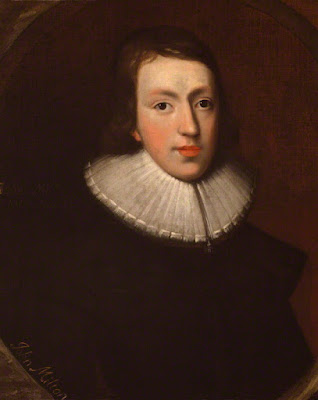
John Milton, author of “Paradise Lost”

Monday, April 25, 2022

A review of “ANZAC: Australians at War in World War Two”


“Fellow Australians, it is my melancholy duty to inform you officially, that in consequence of a persistence by Germany in her invasion of Poland, Great Britain has declared war upon her and that, as a result, Australia is also at war. No harder task can fall to the lot of a democratic leader than to make such an announcement.”

– Australian prime minister Robert Gordon Menzies, in a speech given on 3 September 1939 (the day of the British and French declarations of war)

Where does the name of this documentary come from?

Australians and New Zealanders have long celebrated a public holiday known as “Anzac Day.” Held on the 25th of April (an anniversary associated with their Gallipoli landings), it honors the contributions of their armed forces. “ANZAC” is an acronym standing for the “Australian and New Zealand Army Corps.” This corps was only active from 1914-1916 (an early portion of World War One), and then again in 1941 (a single year in World War Two). Nonetheless, the term “ANZAC” is now used to refer to virtually anyone who has served in the armed forces of either country, regardless of the literal meaning of what the acronym actually stands for. This may explain why the title of this documentary does not literally fit the acronym’s meaning. There are a number of ways in which this documentary departs from the literal meaning of “ANZAC,” since this covers Australian involvement in the entirety of World War II. That is to say, it goes from 1939 to 1945. There is brief mention of the contributions of New Zealanders (the other “ANZAC” nationality), but this documentary definitely focuses on Australia. It also covers their Navy and Air Force, and not just the “Army Corps” to which this acronym refers.


Australian light machine gun team in action during Aitape–Wewak campaign, 1945

Friday, April 22, 2022

A review of “Immanuel Kant” (audiobook)


“I openly confess, the suggestion of David Hume was the very thing, which many years ago first awakened me from my dogmatic slumber, and gave my investigations in the field of speculative philosophy quite a new direction.”

– Immanuel Kant, in the Introduction to his “Prolegomena to Any Future Metaphysics” (1783)

Immanuel Kant may have been the most influential philosopher since antiquity. He was active in virtually every area of philosophy, with writings on many of its subfields. These included epistemology, metaphysics, aesthetics, and ethics. He was probably the most influential of all of the German philosophers, and helped to establish a tradition of writing philosophical works in the German language.

Thursday, March 31, 2022

A review of “Descartes, Bacon, and Modern Philosophy” (audiobook)


Cogito, ergo sum.” (“I think, therefore I am.”)

– René Descartes, in his works “Discourse on the Method” (1637) and “Principles of Philosophy” (1644) – both works give the Latin version, although the earlier work also gave a French version (“Je pense, donc je suis”) that is actually the original

People know René Descartes more for his mathematics than for his philosophy. If you’ve ever taken algebra, you’ve probably seen two-dimensional equations graphed on what is still called a “Cartesian” coordinate plane. It is named after him for good reason, for he pioneered this “merging together” of algebra and geometry. But Descartes was also a very influential philosopher, who took part in the age-old debates over what is the most reliable basis of human knowledge. He answered that it was “reason,” and many in the Western world have since followed his lead in this regard.

Saturday, March 19, 2022

A review of PBS’s “The Gilded Age” (American Experience)


A portrait of capitalism (and some other things) in late nineteenth-century America

This film is a portrait of capitalism (and some other things) in late nineteenth-century America. This is the era now known as “The Gilded Age.” It’s possible to have too much regulation in an economy, but it’s also possible to have too little, and this era (in general) had too little. Corporations purchased monopolies and other special privileges from the government. This would lead to antitrust laws, designed to fight the power of “trusts” (another word for monopolies). But it would also lead to broader debates about the nature of capitalism itself. Should the government try to redistribute wealth? How should we take care of the poor? How do you prevent capitalism from turning into “robber-baron capitalism,” a phrase often associated with the economic system of this time?


Toluca Street Oil Field in Los Angeles oil district, circa 1895–1901