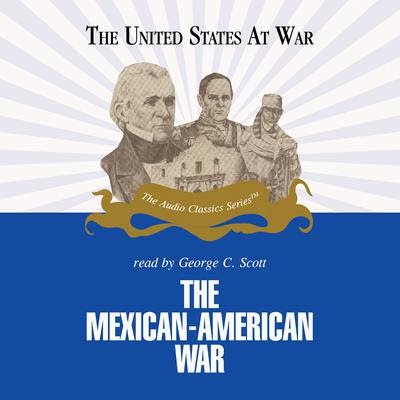
Living in Arizona, one doesn’t have to ask why the “Mexican-American War” is important. I live in a part of Arizona that was once part of Mexico, but was transferred to the United States in the treaty that ended the war. The Treaty of Guadalupe Hidalgo had profound and lasting consequences on both the United States and Mexico. By many reckonings, Mexico lost roughly one-half of its territory to the United States. This is the largest territorial transfer of any war in American history.
Wednesday, February 2, 2022
Saturday, January 22, 2022
A review of “Dimensions of Scientific Thought” (audiobook)
What is science, and how does it work? Are scientific theories certain, or can they change with the evidence? These are the kinds of questions that this audiobook asks. People associate science with a body of knowledge, about DNA or the planet Jupiter or whatever it might be. But science is more a way of thinking about things, than it is a body of knowledge. It’s a way of testing our beliefs, and evaluating them against the evidence. It has roots deep in ancient history, but our understanding of it has evolved dramatically over the centuries. This is one of a number of things that this audiobook makes clear.
Saturday, January 8, 2022
A review of “The War of 1812” (audiobook)
How did the War of 1812 begin? Why did we fight it? Was it worth fighting?
These are questions that people have asked ever since the war happened. These questions are not new, and people will continue to ask them for generations. But this audiobook is the best introduction to this subject that I have ever heard (or expect to hear). In particular, it explores the causes behind this controversial War of 1812. This is a complicated subject, but they help to make it a bit more understandable in their two and a half hours of presentation. The war has roots going back to the previous war, which was the American Revolution.
(Note: The picture above is somewhat inaccurate, as it shows images from the later Civil War, rather than the War of 1812.)
Monday, January 3, 2022
A review of “Stoics and Epicureans” (audiobook)
There’s a brief mention of the Epicureans and Stoics in the New Testament. Specifically, in “The Acts of the Apostles,” it is said that “certain philosophers of the Epicureans, and of the Stoicks” encountered Paul the Apostle (Source: Acts 17:18). I will leave the discussion of this famous encounter to my footnote in this blog post. But suffice it to say here that they were two of the most popular philosophical schools of the classical world. Many Greeks and Romans came from these schools.
Cicero and The Church of Jesus Christ of Latter-Day Saints
The apostles of The Church of Jesus Christ of Latter-Day Saints have referenced the Roman statesman Cicero a number of times, even quoting from him. Cicero was also an orator and philosopher, who wrote extensively on a number of subjects. He wrote in his native language of Latin, but these quotations are all in English translation. These references (including quotations) are as follows:
Roman statesman Cicero, who was also an orator and philosopher
Saturday, December 25, 2021
A review of “Orthodox and Roman Catholic Christianity” (audiobook)
“I believe in one, holy, catholic and apostolic Church.
I confess one Baptism for the forgiveness of sins
and I look forward to the resurrection of the dead
and the life of the world to come. Amen.”
– Closing lines of the “Niceno-Constantinopolitan Creed” (381 CE), a modified version of the “Nicene Creed” (325 CE) – as translated by the 1975 ecumenical version from the “International Consultation on English Texts” (or ICET)
In the eleventh century, Christianity was split into two groups: the Eastern Orthodox Church, and the Roman Catholic Church. These churches are the subjects of this audiobook.
Thursday, December 16, 2021
A review of “The Vision of Léon Walras” (audiobook)
So I recently finished an audiobook about Léon Walras (pronounced “Valras”), a French economist who was alive from the years 1834 to 1910. I knew almost nothing about him before I listened to this audiobook about his work, I am sad to say. So I learned a lot from it, which was good for someone like me to know about. (Although I was basically an economics minor, I didn't hear Mr. Walras's name until well after I had graduated. So if you haven't heard of him, you're not alone – although I had heard some of his ideas before, I had never heard of him personally before I graduated.)
Subscribe to:
Comments (Atom)

