Showing posts with label Mexican history. Show all posts

Sunday, January 19, 2025

How much was Latin America involved in the World Wars?


Anecdote about the European blockade of Venezuela, in the early twentieth century

In 1902, three European nations imposed a naval blockade on the Caribbean-and-Atlantic coastline of Venezuela. The three European nations were Great Britain, Germany, and Italy. All of these European countries would later be fighting both of the others at least once during the future world wars. But, at this time, these three European countries were united – due to some foreign debts that the Venezuelans were then refusing to pay. The Venezuelan president, Cipriano Castro, assumed that the United States would then invoke the Monroe Doctrine on Venezuela’s behalf. But the American president (which was Theodore Roosevelt) saw this doctrine as applying “only to European seizure of territory, rather than intervention per se” – as Wikipedia’s page on the crisis puts it. Thus, the blockade instead went unopposed, and managed to disable the navy of Venezuela. A compromise was eventually worked out in 1903, with the European blockade being maintained in Venezuelan waters throughout the negotiations. But it was one of a number of precursors to the Latin American involvement in the World Wars. Despite the American Monroe Doctrine, there had been much European colonization in the Americas during the nineteenth century. But the Venezuelan Crisis of the early twentieth century reminded Latin Americans of how connected with Europe they still were. And naval affairs in South America would soon lead to a naval arms race.


Blockade of Venezuelan ports, 1902

Friday, April 12, 2024

A review of PBS’s “Breaking the Maya Code”


Deciphering the Maya glyphs opened up an entire world to historians …

Deciphering the Maya glyphs opened up an entire world to historians. People had long known about Ancient Maya civilization, and it was famous for the monuments that it had left behind. But until recent times, the inscriptions on these monuments had long proved impossible for linguists to decipher. The breaking of the Maya code was one of the greatest accomplishments in the history of linguistics, and allowed scholars to learn much about the early history of the Americas. It opened up a world for future study, and allowed the modern Maya people to have a greater connection with their ancestors and their heritage. Europeans are known for their colonial empires, which did not always treat the native peoples kindly (to put it mildly). Indeed, the Spanish Conquistadors had done their best to destroy many of the written Maya records that were available in their own time. But the European and North American scholars who deciphered Ancient Maya are a prominent exception to this. They did the surviving Maya an invaluable favor, by helping to undo some of the cultural damage caused by the Conquistadors.


Tuesday, March 12, 2024

A review of “In Search of History: The Aztec Empire” (History Channel)


Before the Spanish Conquest, they ruled the southern part of what is today Mexico …

Before the Spanish Conquest, there were several native peoples in the Americas. They extended from the Arctic coasts of Canada to the lower tip of South America, and included many cultures and languages. All of them would eventually make contact with white colonists from a variety of European nations. Of those that made contact with Spain, there are a number of great civilizations, including the Maya and the Incas. But in North America, the most famous of these may be the Aztec. The reason for this is because the Aztecs were much closer to home for us. They controlled the southern part of what is today Mexico, at the time that the Conquistadors first arrived on this continent. I live in the United States – and more specifically, in Arizona, a state which shares a border with Mexico. This may explain why we hear somewhat more about them here. Their empire once stretched even further into what is today Central America, and had the beginnings of its own writing system.


Wednesday, February 2, 2022

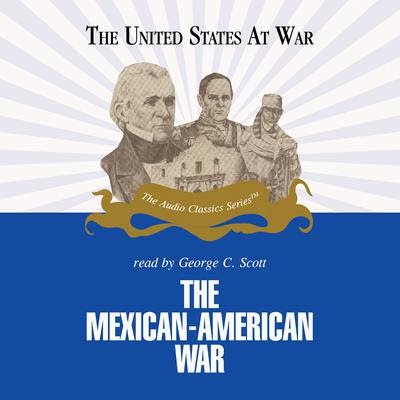
A review of “The Mexican-American War” (audiobook)


Living in Arizona, one doesn’t have to ask why the “Mexican-American War” is important. I live in a part of Arizona that was once part of Mexico, but was transferred to the United States in the treaty that ended the war. The Treaty of Guadalupe Hidalgo had profound and lasting consequences on both the United States and Mexico. By many reckonings, Mexico lost roughly one-half of its territory to the United States. This is the largest territorial transfer of any war in American history.

Saturday, December 25, 2021

A review of “Orthodox and Roman Catholic Christianity” (audiobook)


“I believe in one, holy, catholic and apostolic Church.
I confess one Baptism for the forgiveness of sins
and I look forward to the resurrection of the dead
and the life of the world to come. Amen.”


In the eleventh century, Christianity was split into two groups: the Eastern Orthodox Church, and the Roman Catholic Church. These churches are the subjects of this audiobook.

Thursday, September 16, 2021

A review of PBS’s “Black in Latin America”


The trans-Atlantic slave trade had massive effects on Latin America, and not just the future United States. Because of this, there are significant Black populations scattered throughout the Americas. All of them have roots in the kidnapping of slaves from Africa, of course, but Blacks in each country have a distinct story of their own. Their history transpired differently in some of those countries than it did in others. This program surveys black history in six of these countries. These countries are as follows: Haiti, the Dominican Republic, CubaBrazil, Mexico, and Peru. Since this series has only four episodes, some episodes have to cover more than just one country, although some are focused on just one of them, which allows for greater depth of coverage. (Incidentally, this program is hosted by Henry Louis Gates, Jr., a professor of African American Studies who is himself an African American.)


The Portuguese presenting themselves before the Manikongo – Kingdom of Kongo, Africa

Tuesday, January 24, 2017

A review of PBS's “The Gold Rush”


The California Gold Rush is one of those events that tends to have been heard of by the public, but is often overlooked by popular historians today for a number of reasons,. Among them is that it is partially an economic story, and thus considered less "sexy" than the more "traditional" topics of politics and the military. Nonetheless, the Gold Rush is a monumental event in the history of America which had massive repercussions on the history of the West, causing the rapid colonization of California by White immigrants (and a handful of Chinese immigrants), and creating the ethnic mix that California is so known for today - since it is a race relations story as much as it is anything else, fraught with interest for anyone interested in American history. (But more on the particulars of that later.)


Sutter's Fort - California, 1849 (not to be confused with Sutter's Mill)

Monday, May 2, 2016

Latin America became independent because of Napoleonic Wars – (well, partially)


" ... the American continents, by the free and independent condition which they have assumed and maintain, are henceforth not to be considered as subjects for future colonization by any European powers ... "

- The Monroe Doctrine, expressed by James Monroe (then the President of the United States) in his Seventh Annual State of the Union Address (2 December 1823)

What does Napoleon have to do with Latin American independence?

When Napoleon's troops went to occupy Spain and Portugal, they set off a chain reaction of events that had massive effects on the Spanish and Portuguese colonies in Latin America - including, eventually, independence. But I'm getting ahead of myself.


Napoleon Bonaparte

Friday, November 20, 2015

A review of “The Storm That Swept Mexico”


The "Great Revolution" in Mexico: It's not the war of independence from Spain

If your average person on the street overheard a brief mention of the "Great Revolution" in Mexico (perhaps when I'm talking about it myself), they might assume that we're talking about the war of independence from Spain, with Mexico's war of independence starting in the year 1810. But when most Mexicans speak of the "Great Revolution," they are referring to a revolution against their own government in Mexico, in the year 1910 - almost an exact century after the beginning of their war of independence from Spain. It was a turbulent period, even by the standards of politics in Latin America. But it was one of the most important periods in Mexican history as well. Moreover, it merits the attention of American history buffs who want to understand our southern neighbor.


Leaders of the Mexican revolt of 1910

There is actual footage from the time to tell this story with

Surprisingly, this historical subject caught the attention of some filmmakers at American PBS, who decided to make a documentary about it called "The Storm That Swept Mexico." Because it was made for an American network, it is in English; and when it interviews people speaking Spanish, it uses English subtitles for its largely Gringo audience from north of the border. It's not a very well-known film, even by PBS standards; but its quality is a lot higher than you might expect after hearing this. Because the revolution that it depicts began in the year 1910, there exists actual footage from the time of its chosen subject - silent footage, it is true, but footage just the same. This allows them to make a pretty decent documentary about their subject, without a large budget for re-enactments. The silent footage from the time allows their film's visuals a power that even the best re-enactments would have difficulty achieving. This is probably what allowed them to make the film in the first place, because it could thus be shot on the cheap. This must have made it so that less funding was needed for the project, thus making it more likely for them to get the funding in the first place.


Woodrow Wilson, president of the United States for much of this period


Pancho Villa

Wednesday, September 16, 2015

A review of “Mexico: A History” (by Robert Ryal Miller)


"[The Mexican Empire] solemnly declares by means of the Supreme Junta of the Empire that it is a Sovereign nation and independent of old Spain ... "

Declaration of the independence of the Mexican Empire, issued by its Sovereign Junta, assembled in the Capital on September 28, 1821

Since early 2012, I have made an effort to learn the Spanish language. The reasons for this are many (and too long to detail here), but chief among them is the local usefulness of the language. I live in Arizona (in the American Southwest); so Spanish is the most important local language besides my native English. The opportunities to use Spanish here are endless, and I have long wanted to know something about the Hispanic population of the Southwest. I have interacted with them for years, at school and at church.


Mexican flag

Mexico has a strong influence on the American Southwest

In the American Southwest, most of the Hispanics are of Mexican descent - in contrast to the strong Cuban descent found in Florida, and the strong Puerto Rican descent found in New York - the other parts of the United States where Spanish-speaking populations are most often found. In the American Southwest, people of Mexican origin are the most common ones, and so I thought it might be helpful to know something about their country of origin. Mexico is one of my country's only two neighbors, incidentally (the other being Canada). It is also the one that is closest to my home state of Arizona - and thus, the nation that we Arizonans do the most trade with outside of our own. (Stuff that my American audience already knows, I'm sure; but I have an international audience here, so the geography of my situation is worth going over.)


Thursday, August 13, 2015

A review of Michael Wood's “Conquistadors”


A disturbing and intensely fascinating human drama ...

It caused the fall of empires, and the rise of a new one in their place. It changed the destiny of continents, and left the imprint of Europe on their face. And it was a tale of cruelty and ruthlessness - a disturbing and intensely fascinating human drama - which forever changed the Western Hemisphere; and by extension, the entire world.


Machu Picchu, Peru

The story has an air of Shakespearean tragedy to it ...

The event is, of course, the Spanish Conquest; and generations of schoolchildren have grown up with the story of how it happened. The story has an air of Shakespearean tragedy to it, of complicated characters who manage to be sympathetic even when callous and cruel; and even the brutality and horrors of it cannot stop it from being interesting, captivating, and utterly compelling. We may not like it, but we'll never be able to get away from it; and instead of ignoring it, there is value in learning about this epic tale; and hearing of the tremendous impact it has left on our civilization, and our world.


Moctezuma II being held captive by Cortés, circa 1519 or 1520

Monday, February 2, 2015

A review of “The U.S.-Mexican War 1846-1848” (PBS series)


"The occupation, separation, and annexation [of Texas] were, from the inception of the movement to its final consummation, a conspiracy to acquire territory out of which slave states might be formed for the American Union."

"For myself, I was bitterly opposed to the measure, and to this day regard the war, which resulted, as one of the most unjust ever waged by a stronger against a weaker nation. It was an instance of a republic following the bad example of European monarchies, in not considering justice in their desire to acquire additional territory."

Ulysses S. Grant, in "Personal Memoirs of Ulysses S. Grant," Chapter III

I live in a region of the United States that was once controlled by Mexico (in the state of Arizona), so I live daily with the effects of a war from the 1840's. Few people could put this war in the right half-century, let alone the correct decade; and fewer still could name any major battles or players in this war. Nonetheless, the effects of the war are all around us, and it has entered discussions about contemporary politics on more than one occasion. On topics ranging from illegal immigration to anti-Hispanic racism to foreign policy towards Mexico, we in the American Southwest are often reminded of this war. In less controversial ways, we are reminded of it in the many place names of Spanish origin that surround our homes. From names of streets to names of cities to names of entire states, the influence of Spanish place names are all around us, which were often borrowed in their turn from the native peoples of the region. Mexican culture is all around us, from Spanish taught in schools to the remarkable Mexican food that many of us eat; and the region would belong to Mexico still, if not for a long-ago war from the 1840's.


Mexico lost half its territory to the United States in this war ...

The war was, of course, fought between the United States and Mexico, and was the only major war between our two nations. There have been border skirmishes since then (notably one in the 1910's), but nothing on the massive scale of this one from the 1840's. Mexico lost half its territory to the United States in this war, and several American states were formed out of the land transferred in the peace treaty. The war was undoubtedly an act of imperialist aggression motivated (to some degree, at least) by racism. But there's more to the story than that. Imperialism and racism are favorite topics of liberal PBS; but surprisingly, the network manages to tell the story in a documentary for television with a minimum of political correctness, and manages to stick to the facts about this topic most of the time. My judgments might not completely agree with theirs, but I have to hand it to them that their documentary about this war is extremely interesting, and it is of tremendous value to the student of American history, particularly those who (like me) live in the Southwest. Thus, I thought I would offer my review of this documentary here.