Thursday, March 17, 2022

A review of Frank Delaney’s “The Celts” (BBC)


In 1987, the BBC released a television series called “The Celts,” which was more like two series. In all, the two series had a total of ten episodes, but this DVD set contains only the last of the two series. That is to say, it contains the last six episodes, and omits the first four of them. Why the BBC released it in this way, I don’t know. But as far as I know, the British websites that offer this series all seem to have the same problem as the American websites offering it – including those that mistakenly advertise themselves as having “The Complete Series.” I don’t have enough interest in the first four episodes to search far and wide for them, so I’ll just review the last six here – the ones that I have actually seen. These are sold in a DVD set entitled “The Celts: Rich Traditions and Ancient Myths.” They are good, but they could have been so much more.


Reconstruction of a late La Tène period settlement in Havranok, Slovakia (2nd/1st century BCE)

Thursday, March 3, 2022

A review of “Bargain Hunters, Contrarians, Cycles, and Waves” (audiobook)


So I was recently listening to an audio series about investment. This particular installment was called “Bargain Hunters, Contrarians, Cycles, and Waves.” I found out that it was actually two presentations: one about “The Bargain Hunters and Contrarians,” and one about “Cycles and Waves of the Market.” Both were as interesting as I expected them to be, and brought back fond memories of my days as a business major.

Sunday, February 27, 2022

A review of “Investment Philosophers and Financial Economists” (audiobook)


This audiobook was my introduction to “Secrets of the Great Investors,” an audio series about investment. This particular installment was called “Investment Philosophers and Financial Economists.” I found out that it was actually two presentations: one about “The Investment Philosophers,” and one about “The Financial Economists.” Both were more historical than I would have thought, which added to the appeal for someone like me.

Tuesday, February 22, 2022

A review of “Arthur Schopenhauer” (audiobook)


“To desire immortality is to desire the eternal perpetuation of a great mistake.”

– Arthur Schopenhauer

Arthur Schopenhauer is known as a pessimist, but that is a great understatement. He had a very dark way of seeing the world. For example, he once said that “To desire immortality is to desire the eternal perpetuation of a great mistake.”

Tuesday, February 15, 2022

A review of “Astronomy: The Heavenly Challenge” (audiobook)


The battle over the Sun-centered universe was as much political as it was scientific. During the sixteenth and seventeenth centuries, a theory that had been defended since antiquity was suddenly challenged by the new theory that the Earth revolved around the Sun. In antiquity, the Earth had not yet been recognized as a “planet.” Thus, there was no apparent contradiction in saying that the Sun and the “planets” revolved around the Earth. At this time, it seemed to be the most natural theory in the world. Most importantly, it was defended by the Catholic Church – which held political as well as doctrinal power, and was at the peak of its military and political might.


Wednesday, February 2, 2022

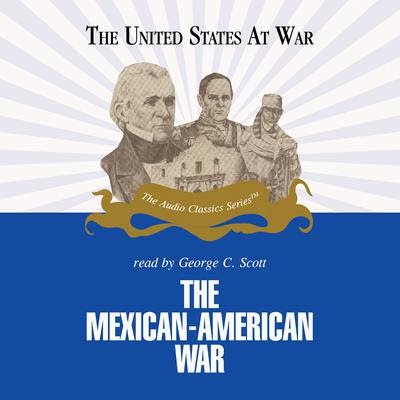
A review of “The Mexican-American War” (audiobook)


Living in Arizona, one doesn’t have to ask why the “Mexican-American War” is important. I live in a part of Arizona that was once part of Mexico, but was transferred to the United States in the treaty that ended the war. The Treaty of Guadalupe Hidalgo had profound and lasting consequences on both the United States and Mexico. By many reckonings, Mexico lost roughly one-half of its territory to the United States. This is the largest territorial transfer of any war in American history.

Saturday, January 22, 2022

A review of “Dimensions of Scientific Thought” (audiobook)


What is science, and how does it work? Are scientific theories certain, or can they change with the evidence? These are the kinds of questions that this audiobook asks. People associate science with a body of knowledge, about DNA or the planet Jupiter or whatever it might be. But science is more a way of thinking about things, than it is a body of knowledge. It’s a way of testing our beliefs, and evaluating them against the evidence. It has roots deep in ancient history, but our understanding of it has evolved dramatically over the centuries. This is one of a number of things that this audiobook makes clear.