Showing posts with label the British courts. Show all posts

Monday, January 15, 2024

Blackstone condemned the execution of Algernon Sidney for high treason


“Treason, proditio, in its very name (which is borrowed from the French) imports a betraying, treachery, or breach of faith. It therefore happens only between allies, faith the mirror [footnote] : for treason is indeed a general appellation, made use of by the law, to denote not only offences against the king and government, but also that accumulation of guilt which arises whenever a superior reposes a confidence in a subject or inferior, between whom and himself there subsists a natural, a civil, or even a spiritual relation ; and inferior so abuses that confidence, so forgets the obligations of duty, subjection, and allegiance, as to destroy the life of any such his superior or lord.”


Algernon Sidney

Algernon Sidney was executed some four decades before Sir William Blackstone was born

Algernon Sidney was executed some four decades before Sir William Blackstone was born. Specifically, our subject Algernon Sidney was executed in 1683, and Sir William Blackstone would not be born until 1723. (But I’m getting ahead of myself here.) Blackstone was in his forties when he wrote his “Commentaries on the Laws of England.” This was a four-volume work, which gave a general overview of its chosen subject. Its fourth and final volume was published in the year 1769. This is the volume that I will be quoting from here. (Incidentally, all quotations from Blackstone’s “Commentaries” in this particular blog post will be from Book 4, Chapter 6 – a chapter entitled “Of High Treason.”)


Statue of Sir William Blackstone

Monday, July 10, 2023

The most serious crimes that anyone can commit (according to Blackstone)


“Of crimes injurious to the persons of private subjects, the most principal and important is the offence of taking away that life, which is the immediate gift of the great creator; and which therefore no man can be entitled to deprive himself or another of, but in some manner either expressly commanded in, or evidently deducible from, those laws which the creator has given us; the divine laws, I mean, of either nature or revelation. The subject therefore of the present chapter will be, the offence of homicide or destroying the life of man, in its several stages of guilt, arising from the particular circumstances of mitigation or aggravation which attend it.”


So I recently finished reading William Blackstone’s “Commentaries on the Laws of England.” This is a four-volume work that influenced our Founding Fathers. For me, the most interesting of these volumes was the last one, which was entitled “Of Public Wrongs.” It contains a number of notable chapters, among them a chapter entitled “Of Homicide.” Like the rest of this volume, this chapter was first published in 1769.


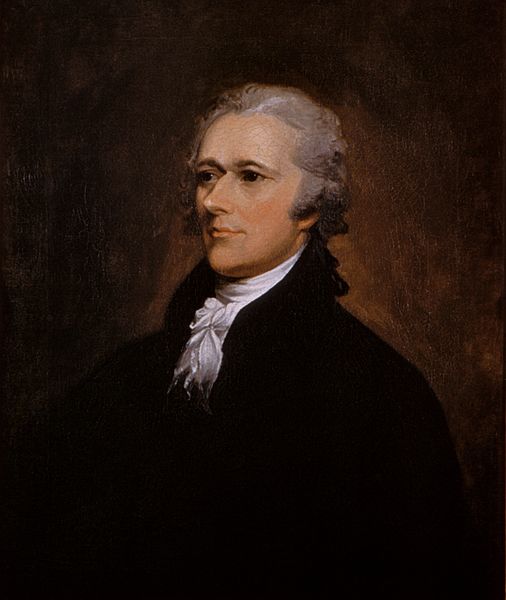
Alexander Hamilton, a fan of Blackstone’s “Commentaries”

Sunday, July 10, 2022

Some thoughts from Blackstone about punishing criminals


“I proceed in the next place to consider the general nature of punishments : which are evils or inconveniences consequent upon crimes and misdemeanors ; being devised, denounced, and inflicted by human laws, in consequence of disobedience or misbehaviour in those, to regulate whose conduct such laws were respectively made.”


Why do we punish small crimes differently from big ones? For that matter, why do we punish criminals at all? Many have asked these questions throughout history. There has been a great variety of answers from all kinds of people. Blackstone’s answers were not new even then, but they were solid answers, and they’re still relevant today.

Thus, I will examine some enlightening passages from his magnum opus, the “Commentaries on the Laws of England.” The fourth and final book of that work is entitled “Of Public Wrongs.” “Public wrongs” is just another way of saying “crimes.” Thus, this is Blackstone’s treatise on criminal law – and specifically, the criminal laws of England at this time. I should mention that all quotations in this particular blog post are from Book 4, Chapter 1. Thus, I will not note this every time. (Incidentally, this particular volume was first published in 1769.)


Coat of arms of Great Britain, 1714-1800

Saturday, July 27, 2019

What is “corruption of blood, or forfeiture” from an attainder of treason?


“The Congress shall have power to declare the punishment of treason, but no attainder of treason shall work corruption of blood, or forfeiture, except during the life of the person attainted.”

Article 3, Section 3, Paragraph 2 of the United States Constitution

The Constitution prevents Congress from “extending the consequences of guilt” beyond those who have actually committed the crimes …

In the Federalist Papers, James Madison once quoted a portion of the Constitution saying that the Congress shall have power “To declare the punishment of treason, but no attainder of treason shall work corruption of blood, or forfeiture, except during the life of the person attained.” (Source: Federalist No. 43) He then commented upon this section, saying that “As treason may be committed against the United States, the authority of the United States ought to be enabled to punish it. But as new-fangled and artificial treasons have been the great engines by which violent factions, the natural offspring of free government, have usually wreaked their alternate malignity on each other, the convention have, with great judgment, opposed a barrier to this peculiar danger, by inserting a constitutional definition of the crime, fixing the proof necessary for conviction of it, and restraining the Congress, even in punishing it, from extending the consequences of guilt beyond the person of its author.” (Source: Federalist No. 43) Corruption of blood just meant impeding someone from inheriting, or passing on property to their own descendants as heirs, on account of a crime that they had committed (usually treason). It thus punished others besides the person guilty of the crime.


James Madison

Sunday, December 16, 2018

The Habeas Corpus Act and the English Bill of Rights influenced our Constitution


“The privilege of the writ of habeas corpus shall not be suspended, unless when in cases of rebellion or invasion the public safety may require it.”

Article 1, Section 9, Paragraph 2 of the United States Constitution

It might come as a surprise to say this, but the British have a real “Constitution,” even if it isn't all written down in one document like ours might seem to be. Rather, it would seem to be a constitution built out of multiple documents, such as the Magna Carta and the Petition of Right (both of which I have covered in prior posts). No less important are the Habeas Corpus Act and the English Bill of Rights, which were foundational for the rights of English-speaking countries. Like the other documents mentioned here, they would both have an enormous influence on the United States Constitution. I have covered the other documents mentioned here in some other posts of this series, so I will instead focus my attention here on the Habeas Corpus Act and the English Bill of Rights (both vitally important).


Parliament of England

Friday, June 15, 2018

When King John signed the Magna Carta, it was like signing a surrender document …


“No freemen shall be taken or imprisoned or disseised or exiled or in any way destroyed, nor will we go upon him nor send upon him, except by the lawful judgment of his peers or by the law of the land.”

The original Magna Carta (1215), Section 39 – using the translation (from the Latin into English) that was offered by Yale Law School's “Avalon Project”

When King John of England signed the Magna Carta in 1215, it was tantamount to signing a surrender document, and was just as humiliating for him. Before, the authority of the king had been almost (if not completely) absolute. Now, it was limited, and his nobles had the king's signature to prove it. Why did the king agree to sign this document in the first place? If he wanted to continue to have absolute power (and he did), why would he agree to such limits upon his power?


King John of England

The short answer for this is that he had no choice – he was forced to sign this document by angry men wielding a sword at him. But how did these noblemen manage to force him to do this at sword-point? How is it that King John lost his grip on absolute power at this time, with his descendants having very little chance of recovering it later on?


The Magna Carta

Thursday, June 7, 2018

The Petition of Right influenced the United States Bill of Rights


“The history of Great Britain is the one with which we are in general the best acquainted, and it gives us many useful lessons. We may profit by their experience without paying the price which it cost them.”

 John Jay, in the Federalist Papers (Federalist No. 5)

It sounds ironic to say it now, but a number of the Founding Fathers of the United States were actually against including a “Bill of Rights” within our Constitution. Some of them thought that it would be dangerous to do so, because they argued that any right not listed there would be construed “not to be protected” by the Constitution. They were partially wrong on this score, of course, and it would fall to other Founding Fathers to make sure that a “Bill of Rights” was later passed. But this early objection to the “Bill of Rights” may have been the reason that it eventually included a Ninth Amendment when it was passed, which said that “The enumeration [or “listing”] in the Constitution, of certain rights, shall not be construed to deny or disparage others retained by the people.” (In other words, rights may not be withheld merely because they aren't listed in the Constitution.) This addressed the concern of those Founding Fathers who had objected to a bill of rights because of this.


Parliament of England

Some Founding Fathers were against having a “bill of rights” in the Constitution …

Nonetheless, when Alexander Hamilton listed examples of a “bill of rights” in one of the Federalist Papers, he was not endorsing them, but slamming them. He was holding them up as bad examples which should be avoided to avert danger from having a “comprehensive” list. Specifically, Hamilton said that “It has been several times truly remarked that bills of rights are, in their origin, stipulations between kings and their subjects, abridgements of prerogative in favor of privilege, reservations of rights not surrendered to the prince. Such was MAGNA CHARTA, obtained by the barons, sword in hand, from King John. Such were the subsequent confirmations of that charter by succeeding princes. Such was the PETITION OF RIGHT assented to by Charles I., in the beginning of his reign. Such, also, was the Declaration of Right presented by the Lords and Commons to the Prince of Orange in 1688, and afterwards thrown into the form of an act of parliament called the Bill of Rights. It is evident, therefore, that, according to their primitive signification, they have no application to constitutions professedly founded upon the power of the people, and executed by their immediate representatives and servants.” (Source: Federalist No. 84)


Alexander Hamilton

… while others were for it

Other Founding Fathers disagreed, and held them up as models of good laws that should be emulated to protect rights. Because of their well-deserved popularity, these laws had a great influence on the first ten amendments to the Constitution (the amendments that later became known as our “Bill of Rights”). They are thus deserving of our attention despite Hamilton's objections to them, and were positive influences on our Constitution once the “Bill of Rights” was passed. I plan to cover all of these documents in this series (plus a few others); but in this post, I shall focus exclusively on the “Petition of Right,” written by Sir Edward Coke. Two decades before King Charles the First was beheaded in the English Civil War, he was forced to sign this document. (And he wasn't too happy about signing it … )


Petition of Right, 1628