Showing posts with label Irish history. Show all posts

Thursday, December 11, 2025

How the British Empire was replaced by the British Commonwealth


“We refer to the group of self-governing communities composed of Great Britain and the Dominions. Their position and mutual relation may be readily defined. They are autonomous Communities within the British Empire, equal in status, in no way subordinate one to another in any aspect of their domestic or external affairs, though united by a common allegiance to the Crown, and freely associated as members of the British Commonwealth of Nations.”

Balfour Declaration of 1926, issued by the 1926 Imperial Conference of British Empire leaders in London

British nations are hit hard in the Great War, a major turning point for the British Empire

Canada lost nearly 1% of its population in World War One, and Australia and New Zealand lost more than 1% of their respective populations therein. The British Isles themselves actually lost roughly 2% of the UK population during this infamous “Great War.” Small wonder, then, that the First World War was a turning point for the British Empire. I plan to cover the lead-up to the Great War elsewhere, so I will not try to attempt such coverage here. Thus, suffice it to say here that things exploded in 1914, when these various parts of the British Empire were all sucked into the conflict. The year 1914, specifically, is thus considered to be a major turning point for the British Empire. To some degree, even India and South Africa were affected by the carnage, although their death rates were somewhat lower than those listed above. Like the United States, these various portions of the British Empire would later send some troops to fight in the Russian Civil War as well, when the broader world war had ended. But these interventions ultimately failed, and communism was nonetheless instituted in Russia. In the negotiations for the postwar peace treaty, all of these portions of the British Empire were represented in the Allied delegation therein. These included CanadaAustraliaNew ZealandSouth AfricaIndia, and (of course) Britain itself. It was then acknowledged that groups like the Anzacs and the Canadians had fought very bravely alongside their comrades from the British Isles. Thus, it was felt that they, too, should have a place at the bargaining table there. This was an unofficial recognition of their status in the still-ongoing British Empire. During the war, the British Isles also saw the Irish rebellion of 1916. This soon led to the creation of the “Irish Free State,” which later became the “Republic of Ireland.” (More about that later.)


Australian troops at Gallipoli, circa 1915 – part of World War One


Irish soldiers at the Somme, 1916 – part of World War One

Thursday, May 1, 2025

A review of Michael Wood’s “The Great British Story: A People’s History”


In America, Ken Burns once said something interesting about American history. That is, he said that the history of the United States is usually told as “a series of presidential administrations punctuated by wars.” You could probably say something similar about the history of our mother country. Schoolchildren in the British Empire were once required to memorize the chronological order of the kings and queens of England. I suppose that there might have been some value in having schoolchildren memorize this stuff. As someone who studies the laws of England, I can tell you that the numerical citation of a Parliamentary law still makes reference to whichever monarch was in power at the time of its passage. Nonetheless, there’s still something to be said for the history of ordinary people as well – and I should note that some of those “ordinary” British people were my own ancestors! My mom has a real talent for family history, and so I’ve seen the names of some of my British ancestors from centuries ago. I’ve even done church work for some of them. (More about that here.) They lived through invasions, plagues, famines, and wars – and passed on their genes well enough to give me the opportunity of writing this post. Thus, this is a personal story for me, since only a few of my British ancestors were “powerful monarchs.” Most of them were ordinary peasants, like the people dramatized in the various episodes of this series.


Monday, March 24, 2025

The English Empire: The predecessor of the British Empire


“In the reign of king Henry the seventh, his ministers (not to say the king himself) were more industrious in hunting out prosecutions upon old and forgotten penal laws, in order to extort money from the subject, than in framing any new beneficial regulations. For the distinguishing character of this reign was that of amassing treasure into the king's coffers, by every means that could be devised: and almost every alteration in the laws, however salutary or otherwise in their future consequences, had this and this only for their great and immediate object.”


In 1485, the last Plantagenet king of England fell in battle. His name was Richard the Third, and he was killed on the battleground of Bosworth Field. The winner of the battle was a young man named Henry, who then became “Henry the Seventh.” He was the first of the Tudor rulers of England. Henry had been on the Lancastrian side of the “Wars of the Roses.” But, when he married a Yorkist lady in 1486, the two factions from the civil war were finally united, since he was marrying someone from that faction. Her name was Elizabeth of York, and she would eventually give birth to a son in 1491. The boy was the future “Henry the Eighth,” who would eventually form the new “Church of England.” (More about that here.) But, at that time, the boy’s birth signaled a formal end to the “Wars of the Roses.” The following year was 1492, the year that Christopher Columbus was arriving in the Americas. Spain and Portugal would soon be creating massive overseas empires, in which they spread their longtime Catholic faith to distant shores. Henry the Seventh was still the king of England in 1496, when he commissioned John Cabot to sail to Asia. Cabot sailed in 1497, but instead landed on the coast of Newfoundland – in what is today Canada. They did not yet attempt to found a colony there. Cabot later made another voyage to the Americas, but did not return. To this day, no one knows what happened to Cabot’s ships.


A replica of John Cabot’s ship the Matthew

Tuesday, June 18, 2024

The British Empire: From the Acts of Union to the Battle of Waterloo


The eighteenth century was a crucial period for the British Empire. It saw the birth of the “Kingdom of Great Britain” itself, in the 1707 “Acts of Union.” It saw much-admired advances in philosophy, from the English philosophers to the “Scottish Enlightenment.” And it saw many important political developments for the British Empire, at home and abroad. For example, it saw the continuation of an ongoing struggle between Britain and FranceBritain would be affected by the loss of many of its overseas colonies in North America. Much closer to home, it was affected by the French Revolution, and the chaos left in its wake. Thus, in the early nineteenth century, it would eventually fight the Napoleonic Wars, one of the defining conflicts of its history. Therefore, an examination of this general period might be in order here. That is, I plan to go from the 1707 “Acts of Union” … to the Battle of Waterloo in 1815. This period has a massive legacy for the British Empire, and for many of its former overseas colonies.


Battle of Trafalgar – Spain, 1805

Friday, October 14, 2022

A review of the BBC’s “The Normans” and “The Normans: The Complete Epic Saga”


There’s a reason that 1066 is the best remembered year in British history. In that year, the Normans invaded England. They are the last people ever to do so successfully. Others have tried since then (notably Napoleon and Hitler), but none of them have succeeded. This is known in English history as “the Norman Conquest” – or sometimes, just “the Conquest.” But who were the Normans? Where did they come from? How did they come to be in France – and then, later, in England? Did they engage in conquests elsewhere in the world? And why, after all of their successes, did they suddenly disappear from the pages of history?


These are complicated questions, and researching them brings a number of surprising answers. But two documentaries are especially good at delving into this subject. They are the BBC’s “The Normans” and “The Normans: The Complete Epic Saga.” I considered reviewing them separately in two different blog posts, but the overlap between them is quite considerable. Thus, it may make sense to cover them together here, and show their relative advantages and disadvantages. Each of them covers some things that the other doesn’t, and brings a unique perspective to some of the events that both of them cover.

Wednesday, June 8, 2022

A review of Neil Oliver’s “Vikings: The Real Warriors” (BBC)


In the year 793, the Vikings attacked a monastery on the English island of Lindisfarne. It was the beginning of the Viking invasion of England – or, at least, the first Viking invasion. Thus, many historians mark this raid as the beginning of the “Viking Age.” It was then that they first became important players on the world stage. But who were the Vikings? Where did they come from? Why did they act as they did? Were they just a kind of “medieval terrorist,” or is there more to the story than that? And why, after all that they accomplished, did they suddenly disappear from the pages of history?

Tuesday, April 26, 2022

A review of Robert McCrum’s “The Story of English” (book)


In 1986, there were two versions of “The Story of English” – a television series, and a book. I never got to see much of the television series, since it’s almost impossible to get on VHS, let alone DVD. I had the opportunity to check out a few episodes from my local library, before that library got rid of these VHS tapes (why, I don’t know). Specifically, I watched the first three episodes, two of which are considered to be the best of them. But I was able to read the bestselling book, the version that I’ll be reviewing here in this blog post. It is a fine book, which I recommend to others interested in either linguistics or English – or history, for that matter.


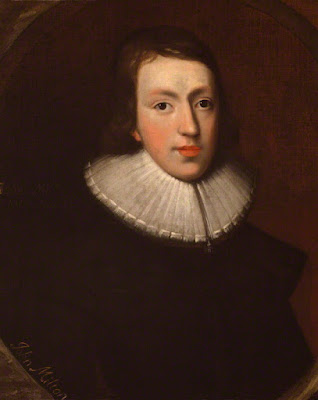
John Milton, author of “Paradise Lost”

Thursday, March 17, 2022

A review of Frank Delaney’s “The Celts” (BBC)


“And, first, with regard to the antient Britons [the Celts], the aborigines of our island, we have so little handed down to us concerning them with any tolerable certainty, that our enquiries here must needs be very fruitless and defective. However, from Caesar's account of the tenets and discipline of the antient Druids in Gaul, in whom centered all the learning of these western parts, and who were, as he tells us, sent over to Britain, (that is, to the island of Mona or Anglesey) to be instructed; we may collect a few points, which bear a great affinity and resemblance to some of the modern doctrines of our English law.”


In 1987, the BBC released a television series called “The Celts,” which was more like two series. In all, the two series had a total of ten episodes, but this DVD set contains only the last of the two series. That is to say, it contains the last six episodes, and omits the first four of them. Why the BBC released it in this way, I don’t know. But as far as I know, the British websites that offer this series all seem to have the same problem as the American websites offering it – including those that mistakenly advertise themselves as having “The Complete Series.” I don’t have enough interest in the first four episodes to search far and wide for them, so I’ll just review the last six here – the ones that I have actually seen. These are sold in a DVD set entitled “The Celts: Rich Traditions and Ancient Myths.” They are good, but they could have been so much more.


Reconstruction of a late La Tène period settlement in Havranok, Slovakia (2nd/1st century BCE)

Saturday, December 25, 2021

A review of “Orthodox and Roman Catholic Christianity” (audiobook)


“I believe in one, holy, catholic and apostolic Church.
I confess one Baptism for the forgiveness of sins
and I look forward to the resurrection of the dead
and the life of the world to come. Amen.”


In the eleventh century, Christianity was split into two groups: the Eastern Orthodox Church, and the Roman Catholic Church. These churches are the subjects of this audiobook.

Friday, April 24, 2020

A review of “The Irish Rebellion 1916” (PBS)


“In every generation the Irish people have asserted their right to national freedom and sovereignty; six times during the past three hundred years they have asserted it in arms. Standing on that fundamental right and again asserting it in arms in the face of the world, we hereby proclaim the Irish Republic as a Sovereign Independent State, and we pledge our lives and the lives of our comrades in arms to the cause of its freedom, of its welfare, and of its exaltation among the nations.”

“Proclamation of the Irish Republic,” 24 April 1916 (during World War One)


Other rebellions had tried to establish Irish independence, but this is the one that succeeded …

There have been many rebellions against British authority in what is today “Ireland,” but most of these rebellions failed to overthrow British rule in Ireland. Indeed, this is part of the reason that the initial rebellions were followed by others in later centuries, to finish the work that the others had tried to begin. But the Irish rebellion of 1916 is the one that succeeded where the others had failed. This is the rebellion that succeeded in creating the “Irish Free State,” which would one day be known as the “Republic of Ireland” – a name that it acquired later, some decades after the fact. Other documentaries have covered this ground before, but PBS seems to cover it in much greater depth than any of the others. Even three hours doesn’t really do this subject justice, as it turns out, but this program seems to make the most of its (still fairly limited) running time. It helps you to understand why this Irish rebellion happened – and why it ultimately succeeded, where the others had failed.


Tuesday, March 17, 2020

A review of Dan Snow’s “How the Celts Saved Britain” (BBC)


Every year on the 17th of March, Christians around the world celebrate “St. Patrick’s Day,” particularly if they are of Irish descent. The name of the holiday clearly indicates whom it is named after, but who is this “St. Patrick,” anyway? And why was he so important to the church, particularly in Ireland? A television program from the BBC tries to answer this.


Saint Patrick

Friday, May 24, 2019

A review of “Queen Victoria's Empire” (PBS Empires)


“ ♪ Rule, Britannia!
Britannia, rule the waves.
And Britons never, never, never shall be slaves. ♪ ”

“Rule, Britannia!” (1740), a British patriotic song written decades before Queen Victoria was born

At the height of the British Empire, it was the largest empire in the history of the world. Its geography was so widespread that people often commented that the sun “never set” on its borders. Actually, it is not the only empire in history to be described in this way, but it may still be the most prominent of them. The British Empire actually predates Queen Victoria's reign by some centuries, with its “first empire” going from 1583 to 1783 (the year that they lost America). The “second empire” went from 1783 to 1815, the year that the Napoleonic Wars ended. But a number of historians believe that Britain's “imperial century” was from 1815 to 1914, the year that World War One began. Queen Victoria reigned for more than half of this latter period, as it turns out, and was alive for an even larger share of it – part of which was before she assumed the throne in 1837. Thus, historians sometimes refer to this empire as “Queen Victoria's” empire, and to this era of British history as the “Victorian era.”


Thursday, March 17, 2016

A review of Fergal Keane's “The Story of Ireland” (BBC Northern Ireland)


" ... the said kingdoms of Great Britain and Ireland shall, upon the first day of January, which shall be in the year of our lord one thousand eight hundred and one, and for ever, be united into one kingdom, by the name of 'the united kingdom of Great Britain and Ireland' ... "

- Act of Union (Ireland) of 1800, passed by the Parliament of Ireland; and accompanying the Union with Ireland Act of 1800, passed by the Parliament of Great Britain

I should preface this review by saying that I am an American, whose ancestors are predominantly from the "British Isles." Although this includes much English, Scottish, and Welsh; I also have a significant portion of Irish ancestry as well; and so Ireland is something of a heritage country for me. As a disclaimer, though, I will freely say that I have grown up with a generally positive view of the British (although one which recognizes that the British were not perfect people, and did a number of things that complicate their legacy). I will also say freely that all of these things notwithstanding, I have not always sympathized with the anti-British rhetoric coming from some in Ireland today, although I have disagreed with a number of things that the British have done over the years - including the way that they treated my American homeland, in the years of our own revolution; and the way they treated the other colonial peoples of their empire in the complicated history of British imperialism.


A modern stained glass window of Saint Patrick (the man who brought Catholicism to Ireland),

whose authenticity I will neither vouch for nor call into question

Catholics and Protestants is a major theme in Irish history

Nonetheless, all these things aside; I felt like I learned a lot from this landmark documentary on "The Story of Ireland," and it helped me to understand the other side of the story - a largely Catholic viewpoint, to be sure - from the one we often hear in my predominantly Protestant country. I consider myself a neutral in the wars between Catholics and Protestants, I should note; and as a devout member of The Church of Jesus Christ of Latter-Day Saints, I don't feel compelled to pick sides in this argument. (As my dad might say, I "don't have a dog in this fight.") I sympathize with both sides in this struggle to a large degree; and I certainly can understand the Irish side - and even sympathize with some of their grievances against the British - without any feelings of shame about my other "British Isles" heritage.


Union Jack flag, a potent symbol of British union that is controversial in much of Ireland

Saturday, April 25, 2015

Cromwell: The movie that brings the English Civil War to life


The English Civil War was a war over ideas, much like the American Revolution ...

The British historian Simon Schama once said that the American Declaration of Independence was "like a chapter from a British history book." He compared the American Revolution to the English Civil War of a century before, even going so far as to say that the American Revolution was really "round two" of the British civil wars. There is truth in this statement, and the events of the English Civil War are eerily familiar to students of the American Revolution. They both were political wars, they both were wars over ideas, and they both began as wars over taxes; which soon transformed into conflicts about much broader issues.


Battle of Naseby, 1645 (during English Civil War)

Monday, September 23, 2013

A review of Melvyn Bragg's “The Adventure of English” (ITV)


"What's in a name? That which we call a rose by any other name would smell as sweet."

- William Shakespeare's "Romeo and Juliet" (1597), Act II, Scene ii

I did not like most of my English classes growing up. This is ironic, considering I wanted to be a fiction writer, but with the notable exception of seventh grade (and English 101 in college), I found my English classes less than inspiring. So it might have come as a surprise to me that I would one day enjoy a documentary about the history of the English language. But enjoy it I did, and I felt inspired to write a post about it here.