Showing posts with label English. Show all posts

Friday, February 6, 2026

An overview of the New Zealand Wars


“The chiefs of the Confederation of the United Tribes of New Zealand and the seperate and independent chiefs who have not become members of the Confederation cede to Her Majesty the Queen [Victoria] of England absolutely and without reservation all the rights and powers of sovereignty which the said Confederation or individual chiefs respectively exercise or possess, or may be supposed to exercise or to possess over their respective territories as the sole sovereigns thereof.”

– Article 1 of the “Treaty of Waitangi” (1840), today considered the basis of the unwritten constitution of New Zealand

Early contact with Europeans, the Musket Wars, and the Treaty of Waitangi (1840)

European ships reached New Zealand as early as 1642. But the two main islands of what is now New Zealand were already inhabited by the Māori, as you may know. The British explorer James Cook arrived in 1769 – and, over the course of three voyages, Captain Cook eventually mapped and circumnavigated New Zealand. Of course, Māori wars predate European contact – but they took on a somewhat different character when European weapons like the musket arrived. This led to the native “Musket Wars,” which went from 1818 to sometime in the 1830s. (It’s hard to know exactly when these wars ended.) On 6 February 1840, William Hobson and his British associates signed the “Treaty of Waitangi” with some of the natives. Its anniversary is today celebrated as the national holiday of New Zealand. It is simply called “Waitangi Day” there. The local Māori tribes were convinced to sign. They had to cede many of their rights to the government of Queen Victoria, much to their chagrin. In return, Queen Victoria recognized their rights as “British subjects” (see the further quotes from the treaty below). Thus, one might say that the “Treaty of Waitangi” forms the basis of the unwritten New Zealand constitution – just as the Magna Carta forms the basis of the unwritten British constitution. But there were soon early engagements between the Māori and the British, such as the Wairau Affray in 1843.


The earlier Musket Wars, a Māori conflict influenced by the European musket


Hōne Heke cuts down the flagstaff on Flagstaff Hill at Kororāreka

Thursday, October 2, 2025

A review of “Gandhi” (1982 movie with Ben Kingsley)


The government of the territories now in the possession or under the government of the [British] East India Company, and all powers in relation to government vested in or exercised by the said Company in trust for Her Majesty [then Queen Victoria], shall cease to be vested in or exercised by the said Company, and all territories in the possession or under the government of the said Company, and all rights vested in or which if this act had not been passed might have been exercised by the said Company in relation to any territories, shall become vested in Her Majesty [Queen Victoria], and be exercised in her name …”

“Government of India Act 1858,” as passed by the Parliament of the United Kingdom of Great Britain and Ireland (incidentally, India had then been ruled by the British East India Company since the 1757 Battle of Plassey – which was more than a century earlier than this act)

India owes its independence from the British Empire to people like Mahatma Gandhi

Mahatma Gandhi was able to free India from British rule, without the nation suffering anything like a full-scale war. There was some amount of violence therein on both sides, but it surely would have been much bloodier without the steadfast efforts of people like Mr. Gandhi. India had actually been ruled by the British since the 1757 Battle of Plassey. Starting in that year, they would now be ruled by a private corporation: the British East India Company. (More about that company in a later post.) But, in 1857 (nearly a century after that battle), the locals had fought a war to free India from the now-notorious rule of that company. This revolt is known by various names – from the Indian Rebellion, to the “Indian Mutiny” (a British name), to the “Sepoy” Rebellion (a local Indian name). Incidentally, the term “Sepoy” refers to a type of Indian infantryman. But, whatever one calls the uprising, the rebellion was soon crushed in 1858. This was more than a decade before Mr. Gandhi’s birth. Thus, that revolt had failed to free India from British rule. But, significantly, the rebellion did change which of the British institutions would now get to control India. That is, control passed from the British East India Company to the British Crown. Thus, Queen Victoria would now have direct control over India. This was the situation in India, when Mr. Gandhi was born there. Specifically, Mohandas Karamchand Gandhi was born in 1869 – the year that the Suez Canal opened in Egypt. The Suez Canal (eventually) would also be controlled by the British Empire, making it easier for the British to send their troops to India. This was because British ships no longer had to go around Africa, but could take a shortcut through the Suez Canal in Egypt. (But that’s a subject for another post.) Regardless, these things would affect the relationship between Britain and its distant colony in India. Gandhi actually spent the earliest years of his life in India. But, in his mid-twenties, he would instead set sail for South Africa in 1893 – which, at that time, was yet another province of the British Empire. This is where the Ben Kingsley movie “Gandhi” begins.


Thursday, May 1, 2025

A review of Michael Wood’s “The Great British Story: A People’s History”


In America, Ken Burns once said something interesting about American history. That is, he said that the history of the United States is usually told as “a series of presidential administrations punctuated by wars.” You could probably say something similar about the history of our mother country. Schoolchildren in the British Empire were once required to memorize the chronological order of the kings and queens of England. I suppose that there might have been some value in having schoolchildren memorize this stuff. As someone who studies the laws of England, I can tell you that the numerical citation of a Parliamentary law still makes reference to whichever monarch was in power at the time of its passage. Nonetheless, there’s still something to be said for the history of ordinary people as well – and I should note that some of those “ordinary” British people were my own ancestors! My mom has a real talent for family history, and so I’ve seen the names of some of my British ancestors from centuries ago. I’ve even done church work for some of them. (More about that here.) They lived through invasions, plagues, famines, and wars – and passed on their genes well enough to give me the opportunity of writing this post. Thus, this is a personal story for me, since only a few of my British ancestors were “powerful monarchs.” Most of them were ordinary peasants, like the people dramatized in the various episodes of this series.


Sunday, July 21, 2024

A review of Ken Burns’ “Hemingway” (PBS)


“Writing, at its best, is a lonely life. Organizations for writers palliate the writer's loneliness but I doubt if they improve his writing. He grows in public stature as he sheds his loneliness and often his work deteriorates. For he does his work alone and if he is a good enough writer he must face eternity, or the lack of it, each day.”

– Ernest Hemingway, in his acceptance speech for the 1954 Nobel Prize for Literature

Ken Burns delivers a stellar (and moving) biography of a great American author

Before watching this film, my only experience with Ernest Hemingway was watching the 1996 film “In Love and War,” which dramatizes both his experiences in World War One and his brief romance with Agnes von Kurowsky (played therein by Sandra Bullock). Admittedly, this was a fairly limited acquaintance with the man, and I still haven’t read any of his works. But I knew of his influence, and was willing to try just about any film made by Ken Burns, despite my admitted literary ignorance. I was a great admirer of his earlier film about Mark Twain, despite having a similar ignorance about Mark Twain and his works. Thus, I set out to record my reaction to Ken Burns’ “Hemingway” in this post.


Friday, April 26, 2024

A review of Michael Wood’s “In Search of Shakespeare”


He had more influence upon the English language than any other individual – perhaps even more than the Biblical translator William Tyndale. Shakespeare’s plays are still read and performed today, more than three centuries after their author’s death. Even literary ignoramuses like me can recognize lines like “Brevity is the soul of wit,” or “To be or not to be” – an oft-parodied line, even in comic strips like “Calvin and Hobbes.” Relatively few of us have ever bothered to read a Shakespeare play when it’s not assigned, partly because the original language can seem rather inaccessible to us today. Yet he left an influence upon the way that we speak, which is still felt right down to the present day.


William Shakespeare

The best way to learn about Shakespeare is probably to read his sonnets and plays, or watch some of his plays performed on stage – or in certain good film adaptations. But this documentary approach will still tell you much about his life. It is a biography of the man – a man whose life has long been shrouded in mystery. In the documentary world, this may be the most in-depth biography of Shakespeare that you’re likely to find. To find something more in-depth, you’d probably have to turn to the world of books. I freely admit that I’m no expert on Shakespeare, since I never even bothered to read one of his plays in the original. The closest that I came was to watch the 1953 film adaptation of his play “Julius Caesar,” starring James Mason as Brutus. This, at least, is closer to him than watching “West Side Story” in my youth – an adaptation of his famous play “Romeo and Juliet.” Incidentally, I turned on the Spanish subtitles for that DVD of Julius Caesar. I had an easier time understanding the Spanish than the Shakespearean English, and I’m a native speaker of English (but not of Spanish).


Garlanded statue of William Shakespeare in Lincoln Park, Chicago

Monday, June 19, 2023

The unknown story behind the King James Version of the Bible


“If God spare my life, ere many years I will cause a boy that driveth the plough, shall know more of the Scripture than thou dost!”

William Tyndale (author of an early translation of the Bible into English), in a heated exchange with a priest

What led up to the King James Version of the Bible (first published in 1611)?

Even today, the King James Version of the Bible is the most commonly-used Biblical translation in the United States. Its influence is declining in some other English-speaking countries, but its status still remains strong today in many others. Even among atheists like Richard Dawkins, it is acknowledged as “a great work of literature.” Dawkins also added that “A native speaker of English who has never read a word of the King James Bible is verging on the barbarian.” Certainly the KJV (as it is often abbreviated) has had a great influence upon the history of the English language. One would have to turn to Shakespeare to find comparable influence upon the history of our own language. I would like to pay a brief tribute to the unsung heroes who helped to bring us this translation into English, as well as those who brought us other translations into other languages. But my focus here will be on the history involved, and what led to the writing of the King James Bible.


St. Jerome, mentioned below

Tuesday, April 26, 2022

A review of Robert McCrum’s “The Story of English” (book)


In 1986, there were two versions of “The Story of English” – a television series, and a book. I never got to see much of the television series, since it’s almost impossible to get on VHS, let alone DVD. I had the opportunity to check out a few episodes from my local library, before that library got rid of these VHS tapes (why, I don’t know). Specifically, I watched the first three episodes, two of which are considered to be the best of them. But I was able to read the bestselling book, the version that I’ll be reviewing here in this blog post. It is a fine book, which I recommend to others interested in either linguistics or English – or history, for that matter.


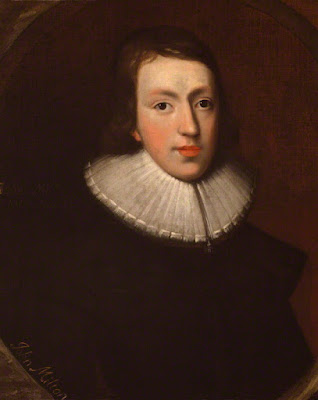
John Milton, author of “Paradise Lost”

Sunday, January 26, 2020

A review of “Australia: The Story of Us”


“It shall be lawful for the Queen, with the advice of the Privy Council, to declare by proclamation that, on and after a day therein appointed, not being later than one year after the passing of this Act, the people of New South Wales, Victoria, South Australia, Queensland, and Tasmania, and also, if Her Majesty is satisfied that the people of Western Australia have agreed thereto, of Western Australia, shall be united in a Federal Commonwealth under the name of the Commonwealth of Australia. But the Queen may, at any time after the proclamation, appoint a Governor-General for the Commonwealth.”

“Commonwealth of Australia Constitution Act 1900,” an act passed by the Parliament of the United Kingdom, which helped to establish the “Commonwealth of Australia”

It’s much easier to get English-language documentaries about the histories of English-speaking countries, as you might expect. This, to be sure, is part of why I got this documentary. But that’s not the only reason – I’m also very interested in the history of the British Commonwealth to boot, of which Australia is still a part. Australia also has a fascinating history in its own right. This is a good documentary about it, to be sure, but its style and focus are not really my favorites. Their focus does have its advantages, because they talk about other things besides the traditional focus on “politics and the military.” If you like the history of sports and music, of science and technology, or of business and the private sector, you will probably enjoy this documentary. But if you’d rather hear more about Australian involvement in World War Two than the origins of Australian football, you’d be better off going elsewhere.


Saturday, November 30, 2019

A review of Ken Burns’ “Mark Twain” (PBS)


“I was sorry to have my name mentioned as one of the great authors, because they have a sad habit of dying off. Chaucer is dead, Spencer is dead, so is Milton, so is Shakespeare, and I’m not feeling so well myself.”

– Mark Twain, in a “Speech to the Savage Club,” 9 June 1899 (about ten years before his death)

I should give a disclaimer that I’ve never read a single book that Mark Twain wrote. I watched a movie or two based on “The Adventures of Tom Sawyer,” and have often heard of his masterpiece “Huckleberry Finn.” But since I didn’t take Honors English in high school, I was never required to read any of his works (although I have heard bits and pieces of them). But I have often been amused by some of his quips, and have admired the quality of his language despite this. Nonetheless, I don’t claim to be an expert on Mark Twain, and can give only a layperson’s view of this documentary. I shall leave the literary criticism to reviewers more qualified to engage in it.


Friday, March 1, 2019

A review of Huw Edwards' “The Story of Wales”


“ … That [the] said Country or Dominion of Wales shall be, stand and continue for ever from henceforth incorporated, united and annexed to and with this Realm of England … ”

“Laws in Wales Act of 1535,” an act passed by the Parliament of England

If you've ever looked for “The Story of Wales” on DVD, you've probably discovered that it's somewhat pricey. Fellow Americans would be lucky to get a copy of it for less than $100 of our own currency. But in my opinion, the benefits may be well worth it; if you're into British history as I am, and if you have British ancestors as I do. My ancestors are from all over the place, actually, and my family tree includes some branches from Wales. But I also have ancestry from Scotland, Ireland, and England as well as Wales. Thus, I have ancestors from all over the British Isles. As you may have gathered, I am an American; and this is my only nationality. But I have a great respect for the United Kingdom, and am proud of my heritage from the British Isles – including, and most relevantly, my Welsh heritage. Thus, I have devoured things related to British history; and was glad for the opportunity to watch this series.


Tuesday, July 4, 2017

A review of Alistair Cooke's “America: A Personal History of the United States”


" ... these United Colonies are, and of right ought to be, FREE AND INDEPENDENT STATES; that they are absolved from all allegiance to the British crown and that all political connection between them and the state of Great Britain is, and ought to be, totally dissolved ... "

- The American Declaration of Independence (July 4, 1776)

The British writer George Bernard Shaw is supposed to have once told a joke about the relationship between Britain and America. "The United States and Great Britain," he said, "are two countries separated by a common language." We argue about how to spell words and how to pronounce them, I think, and the "common ground" between us can sometimes be a battleground. All kidding aside, though, there is something special about the relationship between our two countries; and our shared English language could just be the most obvious manifestation of this extreme closeness. In ways that we sometimes take for granted, I think, we understand each other's humor and share each other's values. Our love of democracy and liberty, furthermore, is a characteristic that is somewhat rare in the world; and though it is found abundantly in both countries, it is not often found elsewhere to the same degree.


Franklin Delano Roosevelt meets with Winston Churchill aboard the HMS Prince of Wales - Atlantic Charter, 1941

The divide between the Americans and the British

Our culture is much the same, I think, and our view of the world is identical in many ways. But there are some differences between us that cause us both to misunderstand each other at times. It is somewhat unfortunate that my fellow Americans, for example, sometimes see the British as stuffy and unemotional (perhaps even snobbish), while the British sometimes see Americans as unsophisticated rubes who can be impetuous (and even obnoxious). I suspect that these differences have their origins in the fact that our histories diverged somewhat after the American Revolution, when the colonies declared that "all political connection between them and the state of Great Britain is, and ought to be, totally dissolved" (in the words of our Declaration of Independence). Thus, we have some significant differences between us, it is true; but these differences are not insurmountable. Thus, the BBC made this series about the history of America in 1973. This series was hosted by the famed journalist Alistair Cooke. This series attempted to explain us Americans - and I am an American, as you may have guessed - to our valued brethren in Britain. Thus, it helped to bridge the occasional gap of misunderstanding that sometimes pops up between us. (Although the misunderstandings are still pretty minimal even without this, and we are still a common family that gets along well most of the time.)


Alistair Cooke, the series presenter

Sunday, April 23, 2017

A review of Michael Wood's “Story of England”


“... there was not one single hide, nor a yard [endnote] of land, nay, moreover (it is shameful to tell, though he thought it no shame to do it), not even an ox, nor a cow, nor a swine was there left, that was not set down in his writ [namely, the Domesday Book] ... ”

“The Anglo-Saxon Chronicle” (a medieval document), chronicling the events of the Great Survey (for taxation purposes) in the year 1085, as recorded in the so-called “Domesday Book” 


Michael Wood, the series presenter

England is the dominant part of the United Kingdom today

Even a cursory look at the British population will show that the dominant part of the United Kingdom is England, since more than 80% of its population resides in England. (That's according to the country's last census in 2011.) The rest of them are often lumped together into the term "Celtic peoples"; which come from the Celtic regions of ScotlandWales, and Northern Ireland. Each of these peoples has a long history of conflict with England, and the fact that they almost always speak English today (not to mention their smaller numbers, in comparison with the English) all testify to the degree that they were conquered by England. This is, of course, a major factor in British society today, and a painful situation for many a Celt.


Did prior series from the BBC cover English history too much (and Celtic history too little)?

It may have been England's predominance over internal British affairs that caused a prior series from the year 2000 - namely, Simon Schama's "A History of Britain" - to focus mainly on England in its political history, rather than to try to cover everything else in the British Isles. A number of Celts felt somewhat neglected by the larger Simon Schama history, and so the BBC made a few other series that focused more on Celtic history - such as Fergal Keane's "The Story of Ireland," Huw Edwards' "The Story of Wales," and Neil Oliver's "A History of Scotland." While these series may have served to pacify some of the Celtic audiences for the BBC, it is ironic that the BBC eventually decided to go back to English history (at least temporarily), and make another series about England - which is, of course, Michael Wood's "Story of England," the topic of this post.


King Henry VIII, the only person to be mentioned by name in an episode title

Thursday, March 17, 2016

A review of Fergal Keane's “The Story of Ireland” (BBC Northern Ireland)


" ... the said kingdoms of Great Britain and Ireland shall, upon the first day of January, which shall be in the year of our lord one thousand eight hundred and one, and for ever, be united into one kingdom, by the name of 'the united kingdom of Great Britain and Ireland' ... "

- Act of Union (Ireland) of 1800, passed by the Parliament of Ireland; and accompanying the Union with Ireland Act of 1800, passed by the Parliament of Great Britain

I should preface this review by saying that I am an American, whose ancestors are predominantly from the "British Isles." Although this includes much English, Scottish, and Welsh; I also have a significant portion of Irish ancestry as well; and so Ireland is something of a heritage country for me. As a disclaimer, though, I will freely say that I have grown up with a generally positive view of the British (although one which recognizes that the British were not perfect people, and did a number of things that complicate their legacy). I will also say freely that all of these things notwithstanding, I have not always sympathized with the anti-British rhetoric coming from some in Ireland today, although I have disagreed with a number of things that the British have done over the years - including the way that they treated my American homeland, in the years of our own revolution; and the way they treated the other colonial peoples of their empire in the complicated history of British imperialism.


A modern stained glass window of Saint Patrick (the man who brought Catholicism to Ireland),

whose authenticity I will neither vouch for nor call into question

Catholics and Protestants is a major theme in Irish history

Nonetheless, all these things aside; I felt like I learned a lot from this landmark documentary on "The Story of Ireland," and it helped me to understand the other side of the story - a largely Catholic viewpoint, to be sure - from the one we often hear in my predominantly Protestant country. I consider myself a neutral in the wars between Catholics and Protestants, I should note; and as a devout member of The Church of Jesus Christ of Latter-Day Saints, I don't feel compelled to pick sides in this argument. (As my dad might say, I "don't have a dog in this fight.") I sympathize with both sides in this struggle to a large degree; and I certainly can understand the Irish side - and even sympathize with some of their grievances against the British - without any feelings of shame about my other "British Isles" heritage.


Union Jack flag, a potent symbol of British union that is controversial in much of Ireland

Monday, November 30, 2015

A review of Neil Oliver's “A History of Scotland”


"That the Two Kingdoms of Scotland and England shall upon the first day of May next ensuing the date hereof and forever after be United into One Kingdom by the Name of Great Britain ... "

"Union with England Act of 1707," Section I (passed by the Parliament of Scotland, and completing the process of Union begun by the "Union with Scotland Act of 1706," passed by the Parliament of England)


For my overseas readers, I should preface this review by saying that I am an American, but one who has ancestors in both Scotland and England - meaning that in the many conflicts between Scotland and England, I have ancestors from both sides of these conflicts; which is actually not uncommon in America. My mother's maiden name is McGregor (a clearly Scottish name), and my father's last name is Sparks (a more English name). Thus, I might have a kind of objectivity about the struggles covered in this series - an objectivity which, perhaps, might possibly be somewhat harder for those whose ancestors are all on one side, or all on the other. I have great pride in both of these cultures, I should add - and in the significant portion of my ancestors who came to America from the various parts of the British Isles. Thus, I had reason to be interested in this series.


Friday, May 1, 2015

A review of Simon Schama’s “A History of Britain”


"That the two Kingdoms of England and Scotland shall upon the First day of May which shall be in the year One thousand seven hundred and seven and for ever after be united into one Kingdom by the name of Great Britain ... "

"Union with Scotland Act of 1706," Article I (passed by the Parliament of England, and later made official by the "Union with England Act of 1707," passed by the Parliament of Scotland)

I should preface this review, for my international readers, by saying that I am an American; but an American of mostly British descent, whose ancestors come mainly from England and Scotland. (England and Scotland today are both part of the United Kingdom of Great Britain.) I identify strongly with Britain; not only because of my ancestry, but because Britons and Americans share common values such as freedom and democracy; and because we have been allies in war and peace for over two centuries; not fighting a war against each other since 1815 (the year the War of 1812 ended). Thus, I am much interested in the history of Great Britain, and thought I'd learn a little bit more about it by watching this series.


Thursday, March 27, 2014

Monday, September 23, 2013

A review of Melvyn Bragg's “The Adventure of English” (ITV)


"What's in a name? That which we call a rose by any other name would smell as sweet."

- William Shakespeare's "Romeo and Juliet" (1597), Act II, Scene ii

I did not like most of my English classes growing up. This is ironic, considering I wanted to be a fiction writer, but with the notable exception of seventh grade (and English 101 in college), I found my English classes less than inspiring. So it might have come as a surprise to me that I would one day enjoy a documentary about the history of the English language. But enjoy it I did, and I felt inspired to write a post about it here.

Monday, July 1, 2013

A review of "Canada: A People's History"


"It shall be lawful for the Queen, by and with the Advice of Her Majesty’s Most Honourable Privy Council, to declare by Proclamation that, on and after a Day therein appointed, not being more than Six Months after the passing of this Act, the Provinces of Canada, Nova Scotia, and New Brunswick shall form and be One Dominion under the Name of Canada; and on and after that Day those Three Provinces shall form and be One Dominion under that Name accordingly."

- Canada's "Constitution Act of 1867," also known as the "British North America Act 1867"

I would like to offer my American perspective to this 32-hour Canadian series. I hope Canadians will not mind. I got this series because I was interested in the history of America's northern neighbor. Canada is one of the United States' biggest trading partners, and being interested in doing trade with Canada, and able to speak both French and English, I thought it would be helpful to know something about Canadian history and culture.


This documentary did not disappoint. It was dramatic and interesting, and I learned much about Canadian history. Having read from many online comments that even Canadians learned something about their history by watching this series, I am struck by its informative and educational power. It is also very moving in places, with great acting, music, and narration. Those looking to learn something about the country will not be disappointed.


The Battle of the Plains of Abraham, a major battle in the Seven Years' War - Quebec, 1759
(an important year in Canadian history, because it was the year that Canada became British)