Showing posts with label law. Show all posts

Wednesday, March 11, 2026

What undergraduate major(s) should I choose to become a lawyer?


“The ABA [or ‘American Bar Association’] does not recommend any undergraduate majors or group of courses to prepare for a legal education. Students are admitted to law school from almost every academic discipline. You may choose to major in subjects that are considered to be traditional preparation for law school, such as history, English, philosophy, political science, economics or business, or you may focus your undergraduate studies in areas as diverse as art, music, science and mathematics, computer science, engineering, nursing or education.”

– Website of the American Bar Association – and, specifically, their page on “Pre-Law”

I once thought about going to law school. Moreover, I got a bachelor’s degree in business, which is one of the more traditional routes for entering the legal profession. But I have never so much as applied to a law school, let alone gotten in or out of one. Thus, I freely admit that I am not an expert on this topic. But it is a topic that I have thought about often over the years. I’ve read some legal classics, such as the Federalist Papers – or Sir William Blackstone’s “Commentaries on the Laws of England.” Thus, I have some experience (after a fashion) with the law, at least in a narrow sense. Thus, I would like to offer my perspective on what kinds of undergraduate majors would be most helpful for law school.


Magna Carta replica and display, in the rotunda of the United States Capitol

To be clear, this is not intended to replace studying the ABA webpage on this subject, which is simply entitled “Pre-Law.” Indeed, I plan to quote from this page often in this particular post. This is just intended to supplement their most definitive webpage with some brief commentary of my own. I will here be focusing on the six majors that are considered to be traditional preparation for law school. This is because, with one exception, these are the relevant areas about which I personally know the most. As the quotation above shows, there are six traditional law school preparation majors. In their words, these are “history, English, philosophy, political science, economics, [and] business.” I will start with English, the only one of these subjects with which I lack any substantial personal experience. Otherwise, I will adhere to the sequence in which they mention these six subjects, giving my commentary on each of them in turn. So let’s dive into the English major first.


United States Constitution, which is still the supreme law of the land in this country

Monday, July 10, 2023

A review of William Blackstone’s “Commentaries on the Laws of England”


“The objects of the laws of England are so very numerous and extensive, that, in order to consider them with any tolerable ease and perspicuity, it will be necessary to distribute them methodically, under proper and distinct heads ; avoiding as much as possible divisions too large and comprehensive on the one hand, and too trifling and minute on the other ; both of which are equally productive of confusion.”


So I spent four and a half years reading Sir William Blackstone’s “Commentaries on the Laws of England.” This is a four-volume work which influenced our Founding Fathers. The first volume was originally released in 1765, and the last was originally released in 1769. This is one of the best books that I’ve ever read, as I’ve tried to show in other posts. But this is the first post in which I’ve attempted to give an overview of the entire work. Thus, I will try to summarize the work for those who’ve never read it before. In doing so, I will give my reaction to the different volumes of Blackstone’s “Commentaries,” and what parts of each volume most stood out to me personally.


Title page of the original edition of the first volume of Blackstone’s “Commentaries”

Sunday, February 12, 2023

Yes, Blackstone’s “Commentaries” influenced Abraham Lincoln (and here’s the proof)


“The election of 1834 came, and [Abraham Lincoln] was then elected to the Legislature [of Illinois] by the highest vote cast for any candidate. Major John T. Stuart, then in full practice of the law, was also elected. During the canvass, in a private conversation he encouraged [Abe to] study law. After the election [Abe] borrowed books of Stuart, took them home with him, and went at it in good earnest. He studied with nobody. He still mixed in the surveying to pay board and clothing bills. When the Legislature met, the law books were dropped, but were taken up again at the end of the session.”

– Abraham Lincoln’s “Autobiography Written for John L. Scripps” (circa June 1860), in which Lincoln strangely is referring to himself in the third person (as shown above)

There was an official campaign biography of Abraham Lincoln in 1860 …

Sir William Blackstone died nearly three decades before Abraham Lincoln was born. But Blackstone would nonetheless have an influence on the young Lincoln through one of his books, as many others have noted. In the year 1860, William Dean Howells wrote the “Life of Abraham Lincoln,” the official campaign biography of Abraham Lincoln (not to be confused with the above-quoted autobiography). This campaign biography was subject to revisions by Lincoln himself. Lincoln did indeed make some modifications whenever he deemed it necessary, but he did not alter the part about Blackstone that I’m going to quote here.


Sir William Blackstone

… which briefly talked about Lincoln’s legal education back in the 1830’s

The passage is about Lincoln’s legal education, which seems to have been gained sometime back in the 1830’s. Lincoln was in his twenties when getting this education. Thus, here is the portion of this biography about Lincoln’s reading of Sir William Blackstone:


William Dean Howells, author of this campaign biography of Lincoln

Sunday, September 18, 2022

Abraham Lincoln recommended Joseph Story, and Jefferson Davis criticized him


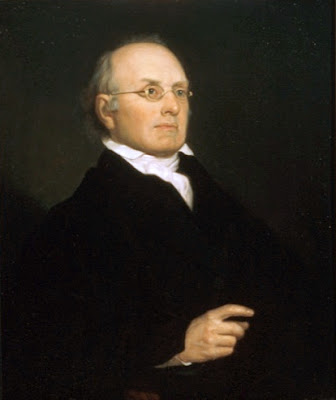
Joseph Story was a U. S. Supreme Court justice, appointed by President James Madison

In 1812, President James Madison appointed a new justice to the United States Supreme Court. His name was Joseph Story, the author of a three-volume work that I would like to read someday. The work is simply called “Commentaries on the Constitution of the United States.” Story had been a Supreme Court justice for more than 20 years, when he published this three-volume work in 1833. He did not leave the court until his death in 1845.


Joseph Story

Friday, August 23, 2019

How did Sir Edward Coke influence Sir William Blackstone?


In 1481 or 1482, Sir Thomas de Littleton wrote a then-famous work called “A Treatise on Tenures.” More than a century later, Sir Edward Coke commented on this work, by writing “The First Part of the Institutes of the Lawes of England, or a Commentary on Littleton in 1628. More than a century after that, Sir William Blackstone discussed Coke’s work in the first volume of his “Commentaries on the Laws of England” in 1765. Coke is the person that Blackstone cited the most in the “Commentaries.” In this great work, Blackstone thus wrote a brief summary of Sir Edward Coke’s writings, to set up his esteemed source (whom he would use often throughout his work). He prefaced this summary with the following praise:


Sir Edward Coke

Lord Chief Justice Coke was “a man of infinite learning in his profession”

“Some of the most valuable of the ancient reports are those published by lord chief justice Coke; a man of infinite learning in his profession, though not a little infected with the pedantry and quaintness of the times he lived in, which appear strongly in all his works. However his writings are so highly esteemed, that they are generally cited without the author's name [footnote].” (Source: Blackstone’s “Commentaries,” Introduction, Section 3)


Sir Thomas de Littleton

Blackstone's summary of Sir Edward Coke ...

Blackstone then gave his brief summary of Sir Edward Coke's writings:

“ … the same learned judge we have just mentioned, Sir Edward Coke; who hath written four volumes of institutes, as he is pleased to call them, though they have little of the institutional method to warrant such a title. The first volume is a very extensive comment upon a little excellent treatise of tenures, compiled by judge Littleton in the reign of Edward the fourth. This comment is a rich mine of valuable common law learning, collected and heaped together from the ancient reports and year books, but greatly defective in method.” (Source: Blackstone’s “Commentaries,” Introduction, Section 3)


Sir Edward Coke

Friday, March 1, 2019

How different was the Constitution from the “Articles of Confederation”?


“The Stile of this Confederacy shall be 'The United States of America'.”

Article I of the “Articles of Confederation and perpetual Union”

First of all, what is a “Confederation”; and how does it differ from the “Confederacy”?

So what is a “confederation,” and how does it differ from the “Confederacy”? The website of Princeton University defines both “confederation” and “confederacy” as “a union of political organizations” (see entry on “confederation” and entry on “confederacy”). There are other definitions for each word, but this is the one that applies here. Another meaning of a “confederacy,” noted by their website, is that of “the southern states that seceded from the United States in 1861” (see entry on “confederacy”), which is defined as synonymous in this context with the “Confederate States of America.” It is important to understand this point: This is not the meaning that applies here. However, the similarity between these two words was not a coincidence, as the Confederates chose this name carefully. The southern states intended their “Confederacy” to be a union of independent nations with strong “states' rights,” as you may know. The Southern states rejected the idea of a “powerful federal government” with strong central control, and preferred that each state retain its “independence” and “sovereignty.” This may have contributed to their eventual downfall in the American Civil War, as the squabbling between the states proved to be catastrophic for them (but good for the country that they were trying to dissolve). The lack of centralized control was then believed to be a virtue, but it ultimately seems to have proved something of a weakness. The “Articles of Confederation” shared many of these same weaknesses, I am sad to say. It may have been more like the “United Nations” than the United States of America.


Interior of Independence Hall

The Declaration of Independence created thirteen “independent states” …

However, the Articles of Confederation actually started out: “The Stile of this Confederacy shall be 'The United States of America'.” (Source: Article I) The Articles of Confederation was not the first official document to use the phrase “United States of America,” because the operative paragraph of the Declaration of Independence had a sentence that began: “We, therefore, the representatives of the United States of America, in General Congress assembled … ” (Source: The Declaration of Independence, 1776) The idea that the thirteen states would be united together into a “confederacy” was an idea new to the Articles of Confederation in 1781, and was probably a step in the right direction. By contrast, the Declaration of Independence had said that “these United Colonies are, and of right ought to be, FREE AND INDEPENDENT STATES; that they are absolved from all allegiance to the British crown and that all political connection between them and the state of Great Britain is, and ought to be, totally dissolved; and that, as free and independent states, they have full power to levy war, conclude peace, contract alliances, establish commerce, and do all other acts and things which independent states may of right do.” (Source: The Declaration of Independence, 1776) Unfortunately, each of the thirteen states still possessed most of these powers for themselves under the Articles of Confederation. But by saying that “The Stile of this Confederacy shall be 'The United States of America',” the Articles of Confederation was trying to unite the thirteen states together into a “perpetual Union” (in the words of the Preamble to the Articles).


John Trumbull's Declaration of Independence

Monday, September 17, 2018

The document that changed everything in America …


When the Founding Fathers wrote the original Constitution in 1787, they were creating a document that would change everything in America, keeping a fragile union of thirteen states from descending into war debts, bankruptcy, and even armed rebellions. One uprising in particular came from a disgruntled Revolutionary War veteran named Daniel Shays, whose uprising against the government of Massachusetts had been an impetus for holding the Constitutional Convention in the first place. It did not start out as a popular document, and was opposed openly even by some of the men who had been present at the Convention. Thus, the particulars of this document were debated fiercely from one end of the thirteen former colonies to the other.


George Mason


Luther Martin

What were the particulars of this document, and why did they create such an uproar when they were first written? What relevance might its passages have today, when our world is so different from the one they inhabited 200 years ago? What was it about this document that caused it to be so successful, and which made the country that adopted it into the greatest superpower that the world has ever known? And why is this most essential ingredient to the country's remarkable success story such an obscure and forgotten secret?

In this series, I will try to answer these questions, as I talk about everything from the people that influenced the Constitution (such as John Locke, and Baron de Montesquieu) to the men that commented on it (such as William Lloyd Garrison, and Abraham Lincoln). I will try to be informative, but I will not shy away from inserting persuasive commentary at times as well. I will lay out the case for why the Constitution of the United States is the greatest success story that human politics has ever known.

Friday, June 15, 2018

When King John signed the Magna Carta, it was like signing a surrender document …


“No freemen shall be taken or imprisoned or disseised or exiled or in any way destroyed, nor will we go upon him nor send upon him, except by the lawful judgment of his peers or by the law of the land.”

The original Magna Carta (1215), Section 39 – using the translation (from the Latin into English) that was offered by Yale Law School's “Avalon Project”

When King John of England signed the Magna Carta in 1215, it was tantamount to signing a surrender document, and was just as humiliating for him. Before, the authority of the king had been almost (if not completely) absolute. Now, it was limited, and his nobles had the king's signature to prove it. Why did the king agree to sign this document in the first place? If he wanted to continue to have absolute power (and he did), why would he agree to such limits upon his power?


King John of England

The short answer for this is that he had no choice – he was forced to sign this document by angry men wielding a sword at him. But how did these noblemen manage to force him to do this at sword-point? How is it that King John lost his grip on absolute power at this time, with his descendants having very little chance of recovering it later on?


The Magna Carta

Thursday, October 27, 2016

So what exactly are the “Federalist Papers,” anyway?


"It has been frequently remarked that it seems to have been reserved to the people of this country, by their conduct and example, to decide the important question, whether societies of men are really capable or not of establishing good government from reflection and choice, or whether they are forever destined to depend for their political constitutions on accident and force."

- Alexander Hamilton, in the Federalist Papers (Federalist No. 1)

Frequently Asked Questions about the “Federalist Papers”

Monday, July 4, 2016

Actually, John Locke DID influence the U. S. Declaration of Independence


"When in the course of human events, it becomes necessary for one people to dissolve the political bands which have connected them with another, and to assume among the powers of the earth, the separate and equal station to which the laws of nature and of nature's God entitle them, a decent respect to the opinions of mankind requires that they should declare the causes which impel them to the separation."

- The Declaration of Independence, July 4, 1776 (first paragraph)

Some have claimed that John Locke didn't have much influence on the Founding Fathers ...

John Locke once wrote an eloquent defense of private property, which liberals enchanted with socialist ideas have long resented. Perhaps because of this, there have been some who have claimed that he did not really have much influence on the Founding Fathers of the United States, who are still quite popular in my American homeland.


John Locke

... so it might be helpful to correct the record

Because of this, it seems like it would be worthwhile now to correct the record; and give the evidence that Mr. Locke - along with others, like Algernon Sidney - did indeed have an influence on the Founding Fathers. Most notably, Locke had a great influence on Thomas Jefferson and the Declaration of Independence; and it can be shown that some of the language within it (not to mention the ideas) are a direct borrowing from John Locke.


Thomas Jefferson

Specifically, he influenced the Declaration of Independence, as these quotes will show ...

I will now present the quotes from the Declaration of Independence (which are well-known), followed by the quotes from John Locke's "Second Treatise on Government" (which are lesser-known). These will help to show that not only are the ideas the same, but in some cases, the language is as well.


John Trumbull's Declaration of Independence

Monday, December 15, 2014

The Bill of Rights: historical context and strict construction


"The enumeration [or "listing"] in the Constitution, of certain rights, shall not be construed to deny or disparage others retained by the people."

- Ninth Amendment to the United States Constitution (ratified 1791), a sometimes-forgotten amendment in the Bill of Rights

It's the most familiar part of the Constitution - the one that the most people can quote. It's the most disputed part of the Constitution - the one whose meaning is most debated. And it's the most tangible part of the Constitution - the one that writes into stone the rights we use every day, and which is thus easiest to apply to everyday life.


The Constitutional Convention

The original Constitution didn't have a Bill of Rights

The portion is, of course, the Bill of Rights; but it was not a part of the original Constitution at all. The United States Bill of Rights was the first ten amendments to the Constitution. For those who don't know, an amendment is just another word for a change. The Constitution has been amended (or changed) 27 times since its adoption, and the first ten amendments written into it were the ones we today call our "Bill of Rights." They can today be seen in the context of the ratification debates, or the debates over whether or not to ratify the Constitution as the "supreme law of the land". The Constitution did not become law until it was approved by nine of the original thirteen states, and the states fiercely debated about whether or not we should have this Constitution.