Showing posts with label murder. Show all posts

Monday, April 14, 2025

A review of PBS’s “The Assassination of Abraham Lincoln”


“Don’t know the manners of good society, eh? Well, I guess I know enough to turn you inside out, old gal – you sockdologizing old man-trap!”

– A comedic line from the play “Our American Cousin” (1858) – spoken by an actor at Ford’s Theater in 1865, the moment before Lincoln was shot there by John Wilkes Booth

Background on John Wilkes Booth, and his unrealized plot to kidnap Abraham Lincoln

I have seen many films about the Civil War. But this film may still rank among the best, despite its relative brevity. It is only 90 minutes long, and it is brilliantly narrated by the actor Chris Cooper. It has many omissions, but it also has some great storytelling. (More about the omissions later.) After a brief introduction, they start by delving into the early life of John Wilkes Booth. They spend some time on his successful stage career, and his early sympathy with the Confederacy. Ironically, John Wilkes Booth had a pro-Northern brother, who later disowned the actions of his notorious sibling. The brother-against-brother phenomenon extended right into the Booths’ own family. But I’m getting ahead of myself here. They spend time on his growing dissatisfaction with Abraham Lincoln, which would later turn into murderous rage. Booth felt some guilt about not having fought for the Confederacy on the battlefield. Thus, he recruited people to help him in a plot to kidnap Abraham Lincoln, and bring him southward. Obviously, this kidnapping plot was never realized – partly because his accomplices pointed out that there were some slight flaws in his plan. But, eight hours before the fateful gunshots, he learned that President Lincoln would be attending Ford’s Theater that night. Thus, he worked at a feverish pace to lay the groundwork for the later events of that evening. Lincoln had few bodyguards around him, in part because no president had ever been assassinated before. That is, there were many other times where Booth could have killed Lincoln with relatively few risks to himself. But he chose Ford’s Theater instead, in part because of his familiarity with the stage. Thus, he got ready to kill President Lincoln. But he also had some accomplices remaining, as well as two other targets.


John Wilkes Booth, the man who murdered Abraham Lincoln


Booth with brothers Edwin and Junius Jr. in Julius Caesar

Thursday, May 23, 2024

A review of PBS’s “Bonnie & Clyde” (American Experience)


It’s strange that people romanticize Bonnie & Clyde, since they murdered 11 people (or more) …

It’s strange that people romanticize Bonnie & Clyde, since they murdered eleven people or more. Wikipedia says that it must have been at least thirteen, consisting of nine police officers and four civilians at the very least. Whatever the exact number, they were among the most notorious outlaws in American history. They were especially known for their bank robberies, although they preferred to rob filling stations and small stores instead. They were active during the Great Depression, and usually operated in the Central United States. Most people wouldn’t know the names of their gang’s other members, but many have heard of Bonnie & Clyde themselves. There’s a certain air of romanticism to them, which has long been hard for me to understand. People seem especially to love the romance between the two main figures.


Tuesday, May 21, 2024

A review of PBS’s “The Perfect Crime” (American Experience)


Leopold and Loeb had committed the “perfect crime” … or had they?

In 1924, one of the most infamous murders in American history was committed. 19-year-old Nathan Leopold and 18-year-old Richard Loeb (better known as “Leopold and Loeb”) murdered a 14-year-old boy named Bobby Franks. The boy was Loeb’s second cousin and across-the-street neighbor. Bobby Franks had played tennis at the Loeb residence several times. The two men tried to lure him into their car as he walked home from school. The boy seems initially to have refused, because his destination was only two blocks away. But Loeb successfully persuaded the boy to enter the car, to discuss a tennis racket that he had been using. As Wikipedia puts it, “Loeb struck Franks, who was sitting in front of him in the passenger seat, several times in the head with [a] chisel, then dragged him into the back seat and gagged him, where he died.”


Monday, July 10, 2023

The most serious crimes that anyone can commit (according to Blackstone)


“Of crimes injurious to the persons of private subjects, the most principal and important is the offence of taking away that life, which is the immediate gift of the great creator; and which therefore no man can be entitled to deprive himself or another of, but in some manner either expressly commanded in, or evidently deducible from, those laws which the creator has given us; the divine laws, I mean, of either nature or revelation. The subject therefore of the present chapter will be, the offence of homicide or destroying the life of man, in its several stages of guilt, arising from the particular circumstances of mitigation or aggravation which attend it.”


So I recently finished reading William Blackstone’s “Commentaries on the Laws of England.” This is a four-volume work that influenced our Founding Fathers. For me, the most interesting of these volumes was the last one, which was entitled “Of Public Wrongs.” It contains a number of notable chapters, among them a chapter entitled “Of Homicide.” Like the rest of this volume, this chapter was first published in 1769.


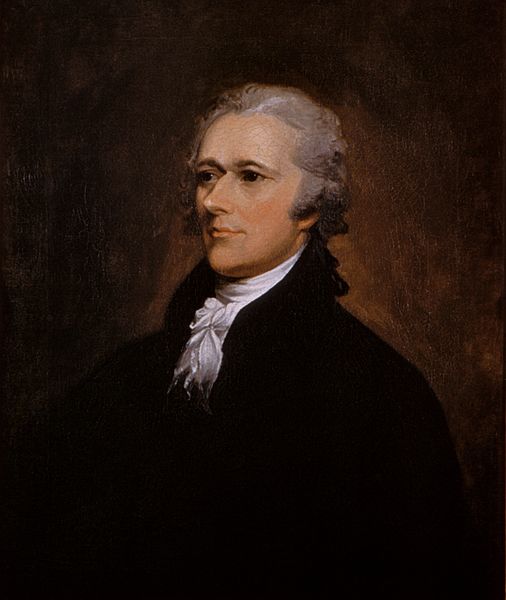
Alexander Hamilton, a fan of Blackstone’s “Commentaries”

Monday, November 19, 2018

A review of PBS's “Murder of a President” (James A. Garfield)


“I conceived of the idea of removing the President four weeks ago. Not a soul knew of my purpose. I conceived the idea myself. I read the newspapers carefully, for and against the administration, and gradually, the conviction settled on me that the President's removal was a political necessity, because he proved a traitor to the men who made him, and thereby imperiled the life of the Republic ... Ingratitude is the basest of crimes. That the President, under the manipulation of his Secretary of State, has been guilty of the basest ingratitude to the Stalwarts admits of no denial. ... In the President's madness he has wrecked the once grand old Republican party; and for this he dies.... I had no ill-will to the President. This is not murder. It is a political necessity. It will make my friend Arthur President, and save the Republic.”

– Charles Guiteau, in his letter to the American people, on 16 June 1881

On July 2nd, 1881, Charles J. Guiteau went to the Baltimore and Potomac Railway Station, and lay in wait for his intended murder victim. President James A. Garfield was scheduled to leave Washington D.C., and Guiteau wanted him dead before his train ever left the city. When President Garfield walked into the waiting room of the station, Charles Guiteau walked up behind him and pulled the trigger at point-blank range from behind. President Garfield cried out: “My God, what is that?”, flinging up his arms. Guiteau fired a second shot, and the president collapsed. One bullet grazed the president's shoulder, while the other struck him in the back. Guiteau put his pistol back into his pocket and turned to leave via a cab that he had waiting for him outside the station, but he collided with policeman Patrick Kearney, who was entering the station after hearing the gunfire. Kearney apprehended Guiteau, and asked him: “In God's name, what did you shoot the president for?” Guiteau did not respond. The crowd called for Guiteau to be lynched, but Kearney took Guiteau to the police station instead. (This paragraph borrows some exact wording from Wikipedia, which I should acknowledge here as a source.)


Contemporaneous depiction of Garfield assassination, with James G. Blaine at right


President Garfield with James G. Blaine in the railway station, shortly after the shooting