Showing posts with label Indian history. Show all posts

Thursday, October 2, 2025

A review of “Gandhi” (1982 movie with Ben Kingsley)


The government of the territories now in the possession or under the government of the [British] East India Company, and all powers in relation to government vested in or exercised by the said Company in trust for Her Majesty [then Queen Victoria], shall cease to be vested in or exercised by the said Company, and all territories in the possession or under the government of the said Company, and all rights vested in or which if this act had not been passed might have been exercised by the said Company in relation to any territories, shall become vested in Her Majesty [Queen Victoria], and be exercised in her name …”

“Government of India Act 1858,” as passed by the Parliament of the United Kingdom of Great Britain and Ireland (incidentally, India had then been ruled by the British East India Company since the 1757 Battle of Plassey – which was more than a century earlier than this act)

India owes its independence from the British Empire to people like Mahatma Gandhi

Mahatma Gandhi was able to free India from British rule, without the nation suffering anything like a full-scale war. There was some amount of violence therein on both sides, but it surely would have been much bloodier without the steadfast efforts of people like Mr. Gandhi. India had actually been ruled by the British since the 1757 Battle of Plassey. Starting in that year, they would now be ruled by a private corporation: the British East India Company. (More about that company in a later post.) But, in 1857 (nearly a century after that battle), the locals had fought a war to free India from the now-notorious rule of that company. This revolt is known by various names – from the Indian Rebellion, to the “Indian Mutiny” (a British name), to the “Sepoy” Rebellion (a local Indian name). Incidentally, the term “Sepoy” refers to a type of Indian infantryman. But, whatever one calls the uprising, the rebellion was soon crushed in 1858. This was more than a decade before Mr. Gandhi’s birth. Thus, that revolt had failed to free India from British rule. But, significantly, the rebellion did change which of the British institutions would now get to control India. That is, control passed from the British East India Company to the British Crown. Thus, Queen Victoria would now have direct control over India. This was the situation in India, when Mr. Gandhi was born there. Specifically, Mohandas K. Gandhi was born in 1869 – the year that the Suez Canal opened in Egypt. The Suez Canal (eventually) would also be controlled by the British Empire, making it easier for the British to send their troops to India. This was because British ships no longer had to go around Africa, but could take a shortcut through the Suez Canal in Egypt. (But that’s a subject for another post.) Regardless, these things would affect the relationship between Britain and its distant colony in India. Gandhi actually spent the earliest years of his life in India. But, in his mid-twenties, he would instead set sail for South Africa in 1893 – which, at that time, was yet another province of the British Empire. This is where the Ben Kingsley movie “Gandhi” begins.


Sunday, December 8, 2024

Forgotten battlegrounds of the World Wars: Asia and the Pacific


Warning: This blog post contains some disturbing pictures. One of these, in particular, is very graphic, and may merit special caution.

We are often told that World War II began in Europe, with the 1939 (Nazi) invasion of Poland. And, in truth, there is a good argument to be made for this date. But some would date it earlier, to the Japanese invasion of China in 1937. Some would date it even earlier than that, to the Japanese invasion of Manchuria in 1931. You could make an argument for any of these three dates being correct, so I will not attempt to settle this controversy here. But either way, there is much about the war in the East that is unknown to the general public. Whenever and however it became a part of World War II, it is clear that this massive conflict began long before Pearl Harbor. This post will dive into a few of the forgotten aspects of the war in the East, and discuss its roots in local colonization by both Western and local Asian powers.


Vietnamese soldier, 1889 – during the French conquest of Vietnam

Background on prior European (and Japanese) colonization of Asia

For example, the Japanese had colonized Iwo Jima as early as the sixteenth century. And there was actually a corporation from the Netherlands called the “Dutch East India Company.” This private company had invaded what is today Indonesia as early as 1603. But the region later fell under the control of the Netherlands government back in Holland in 1800, creating the province of the “Dutch East Indies.” And the British East India Company had gained control of India, in the 1757 Battle of Plassey. India may be the most populous overseas territory that any empire has ever possessed. In the 1820s, the British Empire later gained control of Malaya, which then included Singapore. The British also fought their first war in Burma in the 1820s, partly to maintain their control of nearby India. The British also fought the First Opium War with China from 1839 to 1842. The second British war in Burma came in the mid-1850s, with the great “Indian Mutiny” coming in the late 1850s. Control over India then passed from the British East India Company to the British Crown, thus beginning the era of the “British Raj” in India. From 1850 to 1864, Britain and France were also involved in China’s Taiping Rebellion. And from 1856 to 1860, Britain and France fought the Second Opium War against China. In the late 1860s, there was a civil war in Japan, sometimes called the Boshin War. In 1879, the Empire of Japan annexed the Ryukyu Islands, which included the island of Okinawa. In 1885, there was a third British war in Burma, which saw Burma annexed into British India – with sporadic resistance there for decades afterward. In 1886, though, the British returned to separating the provinces of Burma and India from each other. Back in 1858, the French had begun their infamous conquest of what is today Vietnam. In 1887, the process was completed, and the province of “French Indochina” was born – although resistance there continued into the twentieth century, long after World War II. In 1893, the French also had a brief war with Siam (later renamed to Thailand). At the end of that war, Siam thus ceded some land to French Indochina. In 1894, the Japanese fought their first war with China (with an early invasion of Manchuria), today called the “First Sino-Japanese War.” This was partly about who would control nearby Korea. At the end of the war, the Japanese then began to rule the island of Taiwan in 1895. Between 1899 and 1901, China experienced the Boxer Rebellion. The Russians also invaded Manchuria in 1900. There was an alliance between Britain and Japan starting in 1902. But the Japanese soon attacked the nearby Russians, and beat them in the Russo-Japanese War of 1904-1905. The Japanese then made Korea into a Japanese protectorate in 1905, and formally started to colonize Korea for themselves in 1910. Japanese rule of Korea and Taiwan would then remain unchallenged for decades afterward.


Japanese infantry during the occupation of Seoul – Korea, 1904

Saturday, July 20, 2024

A review of Michael Wood’s “In the Footsteps of Alexander the Great”


“Whilst the Amphictyonic confederacy remained, that of the Achaeans, which comprehended the less important cities only, made little figure on the theatre of Greece. When the former became a victim to Macedon, the latter was spared by the policy of Philip and Alexander [the Great].”


One of the greatest conquerors in history, whose empire stretched from Greece to India …

He was one of the greatest conquerors in history, whose empire stretched from Greece to India. Before he reached age 30, Alexander the Great created a massive empire that would include much of the world, as it was known to the Mediterraneans in his time. Our best sources for his expedition include two histories, both written some centuries after the time of Alexander. One of these two historians was Greek, while the other was a Roman. But Alexander was a Macedonian. The Macedonian language no longer exists today, but it was definitely related to Greek. Some have even considered the Macedonians to be “Greeks” themselves. The host of this program sometimes seems to think so. But the Macedonians did not consider themselves to be “Greeks.” Nor did the self-identified “Greeks” consider the Macedonians to be Greeks. Nonetheless, it is true that the Macedonians spread Greek culture to a then-unprecedented extent. Nothing would spread Greek culture so widely again until the advent of the Roman Empire, which was some centuries later. I thought that it might have been helpful for the host to clarify this issue, even with a brief sentence or two. But this is actually a truly great film despite this omission.


Monday, May 22, 2023

A review of “Science in Antiquity” (audiobook)


People have been curious about the natural world for as long as human beings have existed. The scientific impulse began very early in our history, and it continues today in full force. But its progress began to accelerate when the Sumerians (or perhaps the Egyptians) invented writing for the first time. Some consider this the beginning of “ancient history” (the meaning of “antiquity”). This is because everything before that is considered “prehistory,” rather than “history.” The invention of writing also meant that the discoveries of one generation could now be passed down to the next, and that people could thus learn from their ancestors. This saved them from having to rediscover scientific truths for themselves, and thus allowed the progress of science to accelerate a little more rapidly.

Tuesday, May 3, 2022

A review of “Islam” (audiobook)


Allah—there is no god ˹worthy of worship˺ except Him. He has the Most Beautiful Names.”

– English translation of The Quran, Surah 20:8

Islam is the youngest of the world’s major religions. The others all began in antiquity, while Islam did not begin until the Early Middle Ages. But despite the head start of these other major religions, Islam has grown to be the second-largest religion in the world today. It is surpassed only by Christianity, and surpasses even those who consider themselves “non-religious” (such as atheists, agnostics, and self-described “secularists”). Thus, there is good reason to learn about what Muslims believe, from sources such as this audiobook. I do not know if the author himself was a Muslim, and note that he did not have a Muslim-culture name. (His name was Charles Adams.) Nonetheless, it is one of the best introductions to their faith that I have ever heard, and the author may well be a Muslim of a more Western background.

Tuesday, April 26, 2022

A review of Robert McCrum’s “The Story of English” (book)


In 1986, there were two versions of “The Story of English” – a television series, and a book. I never got to see much of the television series, since it’s almost impossible to get on VHS, let alone DVD. I had the opportunity to check out a few episodes from my local library, before that library got rid of these VHS tapes (why, I don’t know). Specifically, I watched the first three episodes, two of which are considered to be the best of them. But I was able to read the bestselling book, the version that I’ll be reviewing here in this blog post. It is a fine book, which I recommend to others interested in either linguistics or English – or history, for that matter.


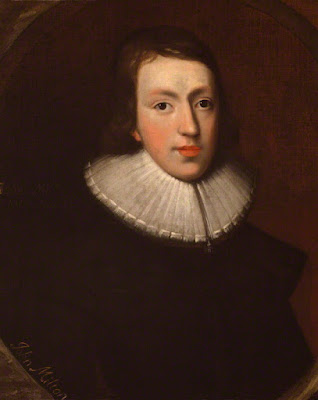
John Milton, author of “Paradise Lost”

Wednesday, May 12, 2021

A review of “Islam: Empire of Faith” (PBS Empires)


˹He is˺ Allah! There is no god ˹worthy of worship˺ except Him, the Lord of the Mighty Throne.”

– English translation of The Quran, Surah 27:26

A history of medieval Islam, and the empires that it influenced …

Islam seems always to be in the news these days. Ever since the 9/11 terrorist attacks, we have heard much about this religion (not all of it accurate). But this series came out before the terrorist attacks had ever happened – the year 2000, to be specific. This may actually be a virtue of the series, that it came out before then. It makes it easier to be objective about their history, and to not read contemporary interpretations into their history that might be best left out. We get neither a heroic nor a villainous version of Islam, but something in between. We hear well-deserved praise of their massive achievements, as well as some presentation of the controversies involved in their history.


Monday, May 18, 2020

Forgotten battlegrounds of the Cold War: South Asia and Indonesia


We the people of Indonesia hereby declare the independence of Indonesia. Matters which concern the transfer of power and other things will be executed by careful means and in the shortest possible time … In the name of the people of Indonesia …”

Indonesian Declaration of Independence (from the Dutch Empire), Djakarta, 17 August 1945

Few parts of the Cold War are more forgotten than this …

Asia was one of the biggest battlegrounds of the Cold War. Two of the biggest of the aptly-named “hot wars” within the Cold War were both fought in East Asia, which were the Korean War and the Vietnam War. Many Cold War conflicts were likewise fought in the Middle East (which is part of Asia), and the Soviets fought their war in Afghanistan in central Asia. In addition, communist China was located in East Asia, and much of the Soviet Union was located in North Asia. But the Cold War events of South Asia are often forgotten, and were not covered in CNN's 18-hour television history of the Cold War (one of the few major omissions on CNN's part there). Thus, an examination of some of these events would seem to be in order here. Some would consider Indonesia to be a part of Southeast Asia, while others would instead consider it to be a part of the region known as Oceania. But since the Cold War events of Indonesia are often forgotten as well, I would like to cover some of them, and this actually seems a convenient place to do so. Like South Asia, Indonesia is a part of the Indian Ocean region, and was a major battleground in the Cold War. Thus, I will combine some of these things together into one post, and show how the Cold War affected the general Indian Ocean region (a forgotten battleground of the Cold War).


Bendera Pusaka, the first Indonesian flag, is raised on 17 August 1945

Friday, May 24, 2019

A review of “Queen Victoria's Empire” (PBS Empires)


“ ♪ Rule, Britannia!
Britannia, rule the waves.
And Britons never, never, never shall be slaves. ♪ ”

“Rule, Britannia!” (1740), a British patriotic song written decades before Queen Victoria was born

At the height of the British Empire, it was the largest empire in the history of the world. Its geography was so widespread that people often commented that the sun “never set” on its borders. Actually, it is not the only empire in history to be described in this way, but it may still be the most prominent of them. The British Empire actually predates Queen Victoria's reign by some centuries, with its “first empire” going from 1583 to 1783 (the year that they lost America). The “second empire” went from 1783 to 1815, the year that the Napoleonic Wars ended. But a number of historians believe that Britain's “imperial century” was from 1815 to 1914, the year that World War One began. Queen Victoria reigned for more than half of this latter period, as it turns out, and was alive for an even larger share of it – part of which was before she assumed the throne in 1837. Thus, historians sometimes refer to this empire as “Queen Victoria's” empire, and to this era of British history as the “Victorian era.”


Wednesday, March 6, 2019

A review of the BBC's “The Story of Maths” (by Marcus du Sautoy)


“Maths is the true language that the universe is written in  the key to understanding the world around us.”

– Marcus du Sautoy, in the conclusion of this series

In America, we often shorten the word “mathematics” to just “math.” In Britain, they retain the pluralization of “mathematics” to make it “maths,” even when shortening it in this way. Thus, no one from Britain would ever be likely to say just “math,” and would probably consider it an Americanism that would sound a little strange to them. But whatever you call it, I've been tutoring people in the subject since 2012, as a professional “math” tutor (and I am an American, as you may have guessed from my spelling of this word).

Monday, July 16, 2018

Bedtime stories about Armageddon: The lessons of the Cold War about nuclear weapons


“I remembered the line from the Hindu scripture … ‘And I am become death, the destroyer of worlds.’ I suppose we all thought that, one way or another.”

Julius Robert Oppenheimer, speaking of the “Trinity” explosion (1945), the first nuclear detonation


The Americans were the first to acquire (and later use) nuclear weapons

In July 1945, the world's first nuclear detonation went off in the American state of New Mexico. The explosion was in the desert near Alamogordo Bombing and Gunnery Range. (This area is now part of White Sands Missile Range.) This was near the end of World War II, and the Cold War had not yet begun at this time. But it would have massive importance in the coming struggle with Soviet Russia. In August 1945, the Americans dropped two atomic bombs on Hiroshima and Nagasaki, which would have an even greater effect on the coming conflict. The frightening effects of these two bombs would haunt the world throughout the Cold War, as a chilling warning of what would happen if they were on the receiving end of a nuclear attack. Indeed, the nuclear weapons first introduced in 1945 were the most important aspect of the global confrontation now known as the “Cold War.” It is the biggest reason why the two major superpowers – which were the United States and the Soviet Union – did not directly engage each other in open conflict on a battlefield, except on a few rare occasions (which I will not elaborate on here).


“Trinity” explosion - New Mexico, United States (16 July 1945)

Why is it called the “Cold War,” when there were so many “hot wars” within it?

The reason that we call it the “Cold War” is that most of the time, the conflict did not involve actual shooting; which would be more characteristic of a “hot war.” Instead, it was usually just a “cold war” with the threat of a nuclear holocaust – although there were some notable exceptions where actual shooting occurred. (Such as the Korean War, the Vietnam War, and the Soviet war in Afghanistan; which were all part of the larger “Cold War.”) This post will not attempt to cover these “hot wars” within the Cold War, and it will not attempt anything like an overview of this massive worldwide conflict. Rather, it will focus on the most important aspect of it, which is nuclear weapons. (Although if you're interested in the other parts of the Cold War, I cover some of them elsewhere on this blog here, for anyone that is interested.) Despite the problems caused by nuclear weapons since their first introduction in 1945, it is well that the Americans (and the free world generally) got this technology before the Nazis or the communists did, sine the prospect of these regimes getting the bomb first would have been chilling indeed. (And the Nazis almost did get it before the Americans did.)


Hiroshima explosion (left) and Nagasaki explosion (right), 6 and 9 August 1945

Monday, August 15, 2016

A review of Michael Wood's “The Story of India”


"As from the fifteenth day of August, nineteen hundred and forty-seven, two independent Dominions shall be set up in India, to be known respectively as India and Pakistan."

- Indian Independence Act of 1947, as passed by the British Parliament

I should give a disclaimer for my international readers that I am from the United States (rather than from India), and that none of my ancestors are from India, either - just from European countries like Britain, the country that financed this documentary. Thus, I do not claim to be an expert on India, as I am just a layperson in North America who is an outsider to this culture. With that disclaimer in mind, I will give an opinion on Michael Wood's "The Story of India," and how it compares with some other country histories I've seen on television.


Tuesday, February 2, 2016

Reflections on studying the history of languages (and how they change over time)


So I recently read a book called "Historical Linguistics" (3rd edition), by Winfred P. Lehmann, which talks about the way that languages tend to change over time, and the way that modern scholars investigate this change. There's a strong emphasis on methodology in this book, but there are enough historical examples from actual data that I felt like I learned some interesting historical content as well - particularly from the regions I'm currently interested in most, which are the various parts of Europe. (Although there is a significant amount of content from India as well.) I feel like I learned a lot from the book.


The textbook that I read

Monday, September 23, 2013

A review of Melvyn Bragg's “The Adventure of English” (ITV)


"What's in a name? That which we call a rose by any other name would smell as sweet."

- William Shakespeare's "Romeo and Juliet" (1597), Act II, Scene ii

I did not like most of my English classes growing up. This is ironic, considering I wanted to be a fiction writer, but with the notable exception of seventh grade (and English 101 in college), I found my English classes less than inspiring. So it might have come as a surprise to me that I would one day enjoy a documentary about the history of the English language. But enjoy it I did, and I felt inspired to write a post about it here.